Code language: MARKDOWN
4K AI Images That Look REAL: Dype ComfyUI Workflow in Promptus Tutorial
Are you tired of AI images that crumble into pixelated messes the moment you zoom in? Do you dream of generating ultra-sharp, breathtaking 4K AI art that rivals the quality of professional photography? The struggle is real. Many AI models simply fail to deliver true high-resolution results, leaving your creations looking blurry and disappointing.
But don't despair! This comprehensive guide will walk you through a powerful solution: leveraging the Dype model within a ComfyUI workflow, all made accessible and user-friendly with Promptus. We'll break down why standard AI models struggle with high resolution, introduce you to the Dype model's capabilities, and provide a step-by-step tutorial on setting up and running the workflow locally using Promptus. Get ready to unlock the secrets to generating cinema-quality, zoom-ready AI images that will leave you and your audience in awe.
In this guide, you'll discover:
- The underlying reasons why most AI models fall short when pushed to 4K resolution.
- The specific models and settings that actually produce true native 4K quality AI images.
- A detailed, beginner-friendly walkthrough on installing and running the Dype ComfyUI workflow locally using Promptus.
- Practical examples to get you started creating stunning portraits and detailed scenes.
Let's dive in and transform your AI image generation game!
The 4K AI Image Problem: Resolution Isn't Always Quality
The first thing to understand is that simply increasing the resolution of an AI-generated image doesn't magically make it look better. In fact, it often reveals the underlying flaws and limitations of the model. Many AI models are trained on lower-resolution datasets. When you force them to generate a 4K image, they essentially "guess" at the details, resulting in blurry textures, distorted features, and an overall lack of sharpness.
Think of it like blowing up a small photo on your phone. The pixels become more visible, and the image loses its clarity. The same principle applies to AI image generation. Simply upscaling a low-resolution image will not produce a true 4K result. You need a model specifically designed and trained to generate high-resolution images from the start.
Why Traditional Upscaling Fails
Traditional upscaling methods, like bicubic or lanczos resampling, simply interpolate the existing pixels to create a larger image. While these methods can smooth out some of the pixelation, they don't add any new detail. The result is often a blurry and artificial-looking image.
AI-powered upscaling methods, like those found in some image editing software, are more sophisticated. They use machine learning algorithms to analyze the image and attempt to add detail based on what they "think" should be there. While these methods can produce better results than traditional upscaling, they are still limited by the quality of the original image. If the original image is blurry or lacks detail, the AI upscaler can only do so much.
The Key: Native 4K Generation
The key to achieving true 4K AI images is to use a model that is specifically trained to generate high-resolution images from the ground up. These models are trained on massive datasets of high-resolution images, allowing them to learn the intricate details and textures that are necessary for creating realistic and sharp images. This is where models like Dype come in.
The Solution: Dype and ComfyUI for True 4K AI Art
The Dype model, combined with the flexibility of ComfyUI and the user-friendly interface of Promptus, offers a powerful and accessible solution for generating native 4K AI images.
What is Dype?
Dype is a diffusion model specifically designed for high-resolution image generation. It's trained on a vast dataset of high-quality images, allowing it to produce stunningly detailed and realistic results, even at 4K resolution. Dype excels at creating intricate textures, sharp details, and overall high-fidelity images.
What is ComfyUI?
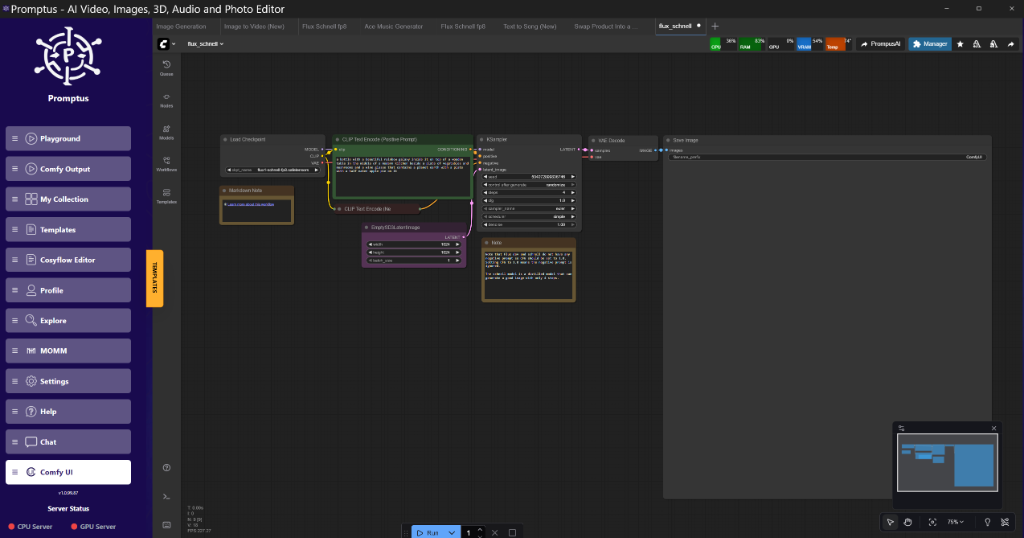
ComfyUI is a node-based visual programming interface for Stable Diffusion. It allows you to create complex workflows by connecting different nodes, each representing a specific operation, such as loading a model, prompting, sampling, and post-processing. While ComfyUI can seem intimidating at first, its visual nature makes it easier to understand and customize the image generation process.
What is Promptus?
Promptus is a desktop application designed to simplify the process of running Stable Diffusion and ComfyUI locally. It provides a user-friendly interface for managing models, setting up workflows, and generating images. Promptus also includes pre-built workflows and integrations, making it easier to get started with advanced techniques like the Dype ComfyUI workflow. It essentially abstracts away much of the technical complexity, allowing you to focus on the creative process.
Why This Combination Works So Well
The combination of Dype, ComfyUI, and Promptus offers several key advantages:
- High-Resolution Quality: Dype provides the underlying model capable of generating true 4K images.
- Workflow Flexibility: ComfyUI allows you to customize the image generation process to your exact specifications.
- Ease of Use: Promptus simplifies the installation, setup, and management of ComfyUI and the Dype model.
- Local Control: Running everything locally gives you complete control over your data and avoids the limitations of online services.
Getting Started: Installing and Setting Up the Dype ComfyUI Workflow with Promptus
Now, let's get practical. Here's a step-by-step guide on installing and setting up the Dype ComfyUI workflow using Promptus.
Prerequisites:
- A computer with a dedicated NVIDIA GPU (recommended for faster performance). While CPU usage is possible, it will be significantly slower.
- Sufficient disk space (at least 50GB) for models and generated images.
- The Promptus Desktop App (download from: www.promptus.ai?utmhttps://www.promptus.ai?utmsource=youtube&utmmedium=social&utmcampaign=4kmap)
Step 1: Installing Promptus
- Download the Promptus Desktop App from the provided link.
- Follow the on-screen instructions to install the application.
- Launch Promptus.
Step 2: Setting up ComfyUI in Promptus
- Within Promptus, navigate to the "ComfyUI" tab (or a similar section dedicated to managing ComfyUI).
- If ComfyUI isn't already installed, Promptus should offer an option to install it. Click "Install ComfyUI" (or a similar button).
- Promptus will handle the installation process, downloading and configuring ComfyUI for you. This may take some time depending on your internet connection.
Step 3: Downloading the Dype Model
- The Dype model is available on GitHub. You can find the link in the video description or here: https://github.com/guyyariv/DyPE
- Download the Dype model files from the GitHub repository. Look for files ending in
.safetensorsor.ckpt. These are the model weights. - You might find multiple Dype models. Download the base model first. You can experiment with other variations later.
Step 4: Configuring Model Directories in Promptus
- Promptus typically has a designated folder for storing models. Find the "Models Directory" setting within Promptus's ComfyUI settings (or a similar section).
- Copy the downloaded Dype model files (
.safetensorsor.ckpt) into this models directory. - You may also need to create or designate specific subfolders within the models directory for different types of models (e.g.,
checkpoints,vae). Place the Dype model in the appropriate folder (likelycheckpoints).
Step 5: Loading the Dype ComfyUI Workflow
- You'll need a ComfyUI workflow specifically designed for the Dype model. This workflow is often provided by the model creator or available on community forums. Look for a file ending in
.json. - Within Promptus, open ComfyUI. This will launch the ComfyUI interface within the Promptus environment.
- In ComfyUI, click the "Load" button (or a similar option) and select the Dype ComfyUI workflow file (
.json). This will load the entire workflow into the ComfyUI interface.
Step 6: Handling Missing Nodes (If Any)
- Sometimes, the workflow may contain custom nodes (extensions) that you don't have installed. If you see any nodes highlighted in red with a "Missing Node" error, you'll need to install the corresponding extension.
- Promptus often provides a way to install missing nodes directly from within the ComfyUI interface (or through a dedicated extensions manager). Follow the prompts to install the required extensions.
- Alternatively, you can manually install extensions by searching for them online and following the installation instructions provided by the extension developers.
Step 7: Restarting and Testing the Workflow
- After installing any missing nodes or making changes to the configuration, it's often necessary to restart ComfyUI. You can typically do this from within Promptus.
- Once ComfyUI is restarted, load the Dype ComfyUI workflow again to ensure that all nodes are correctly loaded.
- Now, it's time to test the workflow. Enter a prompt in the appropriate text box within the ComfyUI workflow.
- Click the "Queue Prompt" button (or a similar button) to start the image generation process.
- ComfyUI will now execute the workflow, using the Dype model to generate an image based on your prompt. This may take some time depending on your hardware and the complexity of the workflow.
- Once the image is generated, it will be displayed in the ComfyUI interface. Examine the image closely to ensure that it is sharp and detailed. Zoom in to check the quality at 4K resolution.
Practical Examples: Generating Stunning 4K AI Images with Dype
Now that you have the Dype ComfyUI workflow set up, let's explore some practical examples to get you started creating stunning 4K AI images.
Example 1: Realistic Portrait Generation
One of the strengths of the Dype model is its ability to generate incredibly realistic portraits. Here's a prompt you can use to get started:
Prompt: "A photorealistic portrait of a young woman with piercing blue eyes, long flowing auburn hair, and a subtle smile. Captured in natural light, with shallow depth of field. High detail, 4K resolution."
Tips for Portrait Generation:
- Specificity is Key: The more specific you are with your prompt, the better the results will be. Include details about the person's age, gender, hair color, eye color, and expression.
- Lighting Matters: Specify the type of lighting you want to use. Natural light, studio lighting, and cinematic lighting can all produce different effects.
- Depth of Field: Experiment with different depth of field settings to create a more realistic and visually appealing image. Shallow depth of field can help to isolate the subject and blur the background.
- Negative Prompts: Use negative prompts to tell the AI what you don't want in the image. For example, you might use negative prompts like "blurry, distorted, artifacts, low quality" to improve the overall quality of the image.
Example 2: Detailed Scene with an Antique Telescope
Dype also excels at generating detailed scenes with intricate textures. Here's a prompt you can use to create a visually stunning image of an antique telescope:
Prompt: "An antique brass telescope sitting on a wooden table in a dimly lit room. Dust motes dancing in the air. The telescope is highly detailed, with intricate engravings and a worn leather grip. The room is filled with books and other antique objects. Cinematic lighting, 4K resolution."
Tips for Scene Generation:
- Focus on Details: The more details you include in your prompt, the more realistic the scene will be. Think about the textures, colors, and lighting.
- Composition: Consider the composition of the scene. Where are the key elements located? How do they relate to each other?
- Atmosphere: Use your prompt to create a specific atmosphere. Dimly lit rooms, fog, and rain can all add to the mood of the scene.
- Experiment with Different Styles: Try different art styles, such as photorealism, painting, or illustration.
Example 3: Abstract Art with Intricate Patterns
While Dype is great for realism, it can also be used to create stunning abstract art.
Prompt: "An intricate abstract pattern composed of swirling colors and geometric shapes. High contrast, vibrant colors, 4K resolution."
Tips for Abstract Art:
- Focus on Color and Shape: Abstract art is all about color and shape. Experiment with different combinations of colors and shapes to create visually interesting patterns.
- Experiment with Textures: Use your prompt to specify different textures, such as smooth, rough, or metallic.
- Don't Be Afraid to Experiment: Abstract art is all about experimentation. Don't be afraid to try new things and see what happens.
Advanced Techniques: Fine-Tuning Your Results
Once you're comfortable with the basics, you can start exploring some advanced techniques to fine-tune your results.
Image-to-Image (Img2Img)
Img2Img allows you to use an existing image as a starting point for your AI generation. This can be useful for refining existing images, adding details, or changing the style of an image.
ControlNet
ControlNet is a powerful tool that allows you to control the structure and composition of your AI-generated images. You can use ControlNet to specify the pose of a person, the layout of a room, or the overall structure of an image.
Prompt Engineering
Prompt engineering is the art of crafting effective prompts that produce the desired results. Experiment with different keywords, phrases, and styles to see what works best for you. Don't be afraid to iterate on your prompts until you achieve the desired outcome. Tools like the Promptus prompt library (www.promptus.ai/blog"https://www.promptus.ai/blog) can be extremely helpful.
Upscaling
While Dype is designed for native 4K generation, you can still use upscaling techniques to further enhance the quality of your images. Experiment with different upscaling algorithms to see which one produces the best results.
Conclusion: Unleash Your Creative Potential with 4K AI Art
Congratulations! You've now learned how to generate stunning 4K AI images using the Dype model, ComfyUI, and Promptus. By following this guide, you can overcome the limitations of traditional AI models and create truly breathtaking artwork.
The power of AI image generation is constantly evolving, and the combination of Dype, ComfyUI, and Promptus offers a powerful and accessible platform for exploring the possibilities. Experiment with different prompts, styles, and techniques to discover your own unique artistic vision.
Ready to take your AI art to the next level?
- Download the Promptus Desktop App: www.promptus.ai?utmhttps://www.promptus.ai?utmsource=youtube&utmmedium=social&utmcampaign=4kmap
- Explore the Promptus prompt library for inspiration: www.promptus.ai/blog"https://www.promptus.ai/blog
- Join the Promptus community to share your creations and learn from other artists.
Unleash your creative potential and start generating amazing 4K AI art today!