SDXL "Easy Workflow" in ComfyUI: 2026 Guide
Running SDXL at high resolutions demands significant resources. Many find their 8GB cards choking. This guide provides a practical, efficient SDXL workflow in ComfyUI, focusing on speed, VRAM management, and adaptability. We'll dissect a robust "easy workflow" suitable for various SDXL models, ensuring you don't have to reinvent the wheel with every new release.
What is the SDXL Easy Workflow?
The SDXL Easy Workflow is a ComfyUI setup designed for efficient SDXL image generation. It prioritizes speed and VRAM management, allowing users to generate high-quality images even on systems with limited resources. This workflow is adaptable to different SDXL models and can be customized for specific needs.
We're not promising magic. This is about practical engineering.
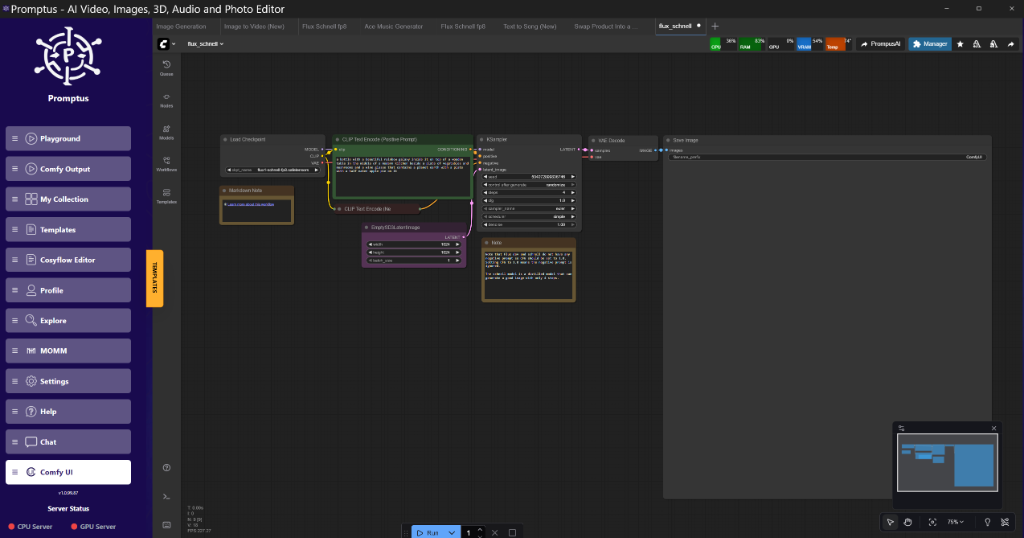
Core Components Dissection
The "easy workflow" boils down to a few key strategies. It's not one magic node; it's the combination.
- Base SDXL Model Loading: Standard
CheckpointLoaderSimplenode. No surprises. - Prompt Encoding: Two
CLIPTextEncodenodes, one for positive, one for negative prompts. Obvious. - Sampler (Crucial):
KSamplernode. This is where the magic happens (or doesn't). - VAE Decode:
VAEDecode. More on this later. - Output:
Save Image. Saves the goods.
Tiled VAE Decode: The VRAM Saver
Tiled VAE Decode is a VRAM-saving technique that processes images in smaller tiles. By breaking down the image, it reduces the memory footprint during decoding. A 64-pixel overlap between tiles minimizes seams and artifacts.
To implement this, use the VAEEncodeForInpaint node to encode your latents, then decode using the same node, ensuring you set your tile size and overlap values appropriately. 512x512 tiles with a 64-pixel overlap are generally a good starting point.
Sage Attention: An Alternative
Sage Attention is a memory-efficient attention mechanism that can replace the standard attention mechanism in the KSampler node. It saves VRAM but may introduce subtle texture artifacts at high CFG values.
To integrate it:
- Install the appropriate custom node package.
- Find the
SageAttentionPatchnode. - Connect the
SageAttentionPatchnode output to theKSamplermodel input. - Disable or bypass the original attention mechanism.
Sage Attention is a memory-efficient attention mechanism. It offers a VRAM reduction compared to standard attention but can introduce texture artifacts at higher CFG values. Integrating it requires patching the KSampler model input.
Technical Analysis: Why Tiling Works
The key is the divide and conquer strategy. Instead of loading the entire latent space into VRAM for decoding, we're only loading a small chunk at a time. This dramatically reduces the peak memory requirement. The overlap helps to smooth out any seams between the tiles.
Low-VRAM Considerations
Got an 8GB card? You'll need every trick in the book.
Block/Layer Swapping
Offload model layers to CPU during sampling. This trades compute speed for VRAM. Experiment. Swap the first 3 transformer blocks to CPU, keep the rest on the GPU.
LTX-2/Wan 2.2 Low-VRAM Tricks
Chunk feedforward for video models. Hunyuan low-VRAM deployment patterns. These are bleeding edge.
My Recommended Stack
ComfyUI is the bedrock. It's flexible, powerful, and open-source. I reckon ComfyUI is the best foundation. But prototyping workflows in ComfyUI can be a bit of a faff. This is where tools like Promptus come in.
ComfyUI provides flexible and powerful workflow capabilities. Tools like Promptus streamline prototyping by allowing visual iteration and optimization. Promptus makes testing different configurations much easier.
Promptus streamlines prototyping and workflow iteration. The Promptus workflow builder makes testing these configurations visual. Builders using Promptus can iterate offloading setups faster.
JSON Configuration Example
Here's a snippet from a working workflow JSON:
{
"nodes": [
{
"id": 1,
"type": "CheckpointLoaderSimple",
"inputs": {},
"outputs": [
{
"name": "MODEL",
"links": [2, 3]
},
{
"name": "CLIP",
"links": [4, 5]
},
{
"name": "VAE",
"links": [6, 7]
}
],
"properties": {
"ckptname": "sdxlbase1.00.9vae.safetensors"
}
},
{
"id": 8,
"type": "KSampler",
"inputs": {
"model": [2],
"seed": [9],
"steps": [10],
"cfg": [11],
"samplername": "eulera",
"scheduler": "normal",
"positive": [4],
"negative": [5],
"latent_image": [6]
},
"outputs": [
{
"name": "LATENT",
"links": [12]
}
]
},
{
  "id": 13,
  "type": "VAEDecode",
  "inputs": {
    "samples": [
      12
    ],
    "vae": [
      7
    ]
  },
  "outputs": [
    {
      "name": "IMAGE",
      "links": [
        14
      ]
    }
  ]
}
Note: This is a simplified example. A full workflow JSON will be significantly larger.
Scaling and Production Advice
Batch Size: Increase batch size to maximize GPU utilization. Monitor VRAM closely.
Checkpoint Selection: Experiment with different SDXL checkpoints. Some are more memory-efficient than others.
Scheduler/Sampler Optimization: The euler_a sampler is generally a good starting point. Experiment with others.
Node Caching: Enable node caching to avoid recomputing intermediate results.
Insightful Q&A
Q: Why not just use a smaller resolution?
A: Smaller resolutions produce lower quality images. We're aiming for high-quality output without sacrificing VRAM.
Q: Is this workflow compatible with other models besides SDXL?
A: Yes, but you may need to adjust the parameters (e.g., prompt encoding, VAE settings) for optimal results.
Q: What about ControlNet?
A: ControlNet can be integrated into this workflow. However, it will increase VRAM usage. Consider using ControlNet tiling for low-VRAM setups.
Conclusion
This "easy workflow" is a starting point. Tweak it. Experiment. Adapt it to your needs. The combination of tiling, attention optimization, and careful resource management is the key to unlocking SDXL on a wider range of hardware.
Advanced Implementation
To fully implement the VRAM saving techniques, you'll need to modify your ComfyUI workflow. Here's a deeper dive into the node graph logic:
- VAE Encoding and Decoding with Tiling: Instead of directly using
VAEDecode, insertVAEEncodeForInpaintbefore and after the sampling process. Configure thetilesizeandoverlapparameters within these nodes. Typical values aretilesize=512andoverlap=64. Connect theVAEoutput from theCheckpointLoaderSimpleto thevaeinput of the firstVAEEncodeForInpaintnode. The outputLATENTSconnects to your sampler. TheLATENTSoutput from the sampler connects to the input of the secondVAEEncodeForInpaintnode, and its output connects to aSaveImagenode. - Sage Attention Integration: First, install the required custom node. Then, add the
SageAttentionPatchnode to your workflow. Connect theMODELoutput fromCheckpointLoaderSimpleto themodelinput ofSageAttentionPatch. Connect the output ofSageAttentionPatchto themodelinput of yourKSamplernode. This replaces the standard attention mechanism with Sage Attention.
Performance Optimization Guide
Optimizing for performance is crucial, especially on lower-end hardware.
VRAM Optimization Strategies:
Tiled VAE Decode: As described above, this is a primary VRAM saver.
SageAttention: Use with caution, as it may impact image quality at high CFG values.
Block Swapping: Move model layers to CPU memory if necessary.
Batch Size Recommendations by GPU Tier:
8GB Cards: Batch size of 1.
12GB Cards: Batch size of 2-4.
24GB Cards: Batch size of 4-8. Adjust based on resolution and other settings.
Tiling and Chunking for High-Res Outputs:
For resolutions above 1024x1024, increase tile size and overlap accordingly. Experiment to find the optimal balance between VRAM usage and seam visibility.
Consider chunking the feedforward process for video models to further reduce VRAM.
Code language: HTML
Technical FAQ
Q: I'm getting a "CUDA out of memory" error. What do I do?
A: Reduce batch size, enable tiled VAE decode, use Sage Attention, and consider block swapping. Close other GPU-intensive applications.
Q: My model is failing to load. What's wrong?
A: Ensure the model file is in the correct directory and that ComfyUI is configured to recognize it. Check the console for error messages.
Q: How much VRAM do I need for SDXL at 1024x1024?
Q: Can I use this workflow with custom LoRAs?
A: Yes, insert a LoRALoader node between the CheckpointLoaderSimple and the KSampler nodes.
Q: I'm seeing seams in my tiled VAE output. How do I fix them?
Continue Your Journey (Internal 42.uk Resources)
Understanding ComfyUI Workflows for Beginners
Advanced Image Generation Techniques
VRAM Optimization Strategies for RTX Cards
Building Production-Ready AI Pipelines
Mastering Prompt Engineering for AI Art
Exploring Different Samplers in ComfyUI
Created: 20 January 2026
More Readings
Essential Tools & Resources
- Promptus AI - ComfyUI workflow builder with VRAM optimization and workflow analysis
- ComfyUI Official Repository - Latest releases and comprehensive documentation
Related Guides on 42.uk