ComfyUI: Node Basics and Workflow Construction
This ComfyUI basics guide focuses on workflow construction after installation: how nodes expose inputs and outputs, how links carry models and latents, and how loaders, samplers and VAE decoders form a reusable graph. If ComfyUI is not yet producing a first image, start with the installation and model-placement guide.
What are ComfyUI Nodes?
ComfyUI nodes are the building blocks of visual workflows. Each node performs a specific task, such as loading a model, applying a prompt, or encoding/decoding an image. Connecting these nodes creates a graph that defines the image generation process.
Nodes are the fundamental units in ComfyUI. Think of them as individual Lego bricks, each with a specific function. You chain these bricks together to create a complete pipeline. You'll find nodes for loading models, applying prompts, sampling, encoding/decoding images, and all sorts of other operations. Finding the right node is key. Right-click in the ComfyUI interface to bring up the "Add Node" menu, where you can search by category or keyword.
Linking Automatic1111 Models
To use your existing Stable Diffusion models from Automatic1111, you need to configure the model paths in ComfyUI's settings. This allows ComfyUI to access and load the models without needing to copy them.
One of the first things most users want to do is link their existing Stable Diffusion models from Automatic1111 into ComfyUI page publication date: . This avoids duplication of massive model files. To do this, you'll need to modify the extramodelpaths.yaml file (or create it if it doesn't exist) in your ComfyUI directory. Add the paths to your Automatic1111 models, VAEs, and LoRAs. The exact location of this file may vary depending on your ComfyUI installation.
yaml
base_path: /path/to/ComfyUI
extramodelpaths:
- modelname: SDXLbase
path: /path/to/automatic1111/models/Stable-diffusion/sdxlbase_1.0.safetensors
model_type: sd
- modelname: SDXLvae
path: /path/to/automatic1111/models/VAE/sdxl_vae.safetensors
model_type: vae
Make sure the paths are correct, or ComfyUI won't be able to find the models. Once you've configured the paths, restart ComfyUI. Your models should now appear in the model loading nodes.
Connecting Nodes: Building Your First Workflow
Connecting nodes involves dragging output sockets from one node to input sockets on another. This creates a data flow that defines the processing sequence. Understanding the different socket types is crucial for building valid workflows.
Connecting nodes is where the visual aspect of ComfyUI really shines page publication date: . Each node has input and output sockets. The key is to connect compatible sockets. For example, you can't connect a "model" output to an "image" input. The colour of the socket indicates its type (e.g., green for model, yellow for conditioning). Drag from an output socket to a compatible input socket to create a connection.
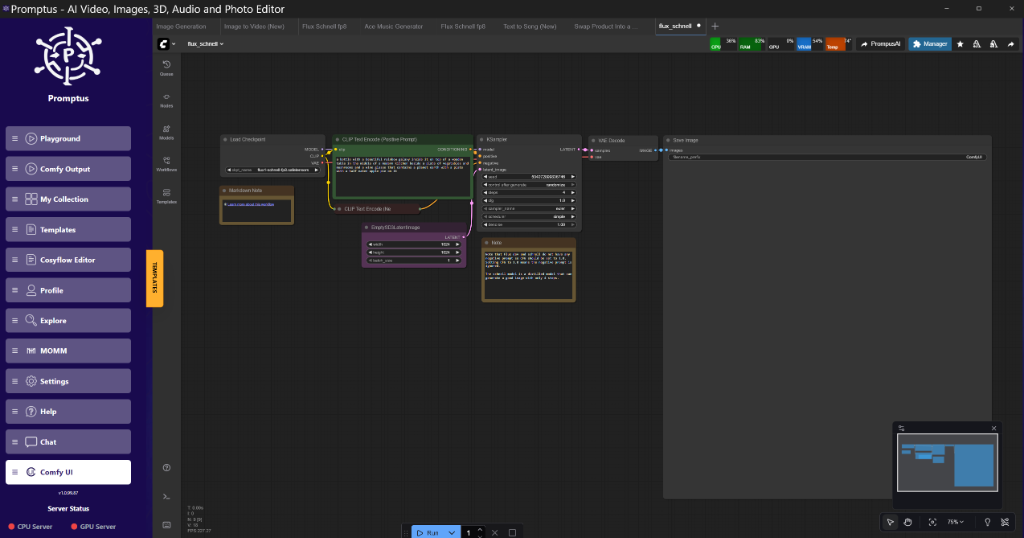
A well-structured workflow is crucial for achieving consistent results. Start with the Load Checkpoint node, connect its model output to a KSampler node's model input. Similarly, connect the VAE output to the VAE Decode node. The positive and negative conditioning outputs from the CLIP Text Encode (Prompt) nodes should be connected to the corresponding inputs on the KSampler. Finally, the image output from VAE Decode goes to a Save Image node. This is a basic text-to-image workflow.
Node Groups: Organisation is Key
Node groups allow you to encapsulate sections of your workflow into reusable modules. This simplifies complex graphs and makes them easier to manage and share. You can also customize node groups with input and output interfaces.
As your workflows become more complex, you'll want to organize them using node groups page publication date: . Select a group of nodes, right-click, and choose "Create Group". This encapsulates the selected nodes into a single, collapsible unit. You can rename the group for clarity. Node groups can be nested, allowing for hierarchical organization of complex workflows.
Use node groups to create reusable components. For example, you might create a node group for a specific upscaling process or a particular style transfer technique. These groups can then be easily reused in other workflows.
VRAM Optimization Techniques
VRAM optimization is crucial for running demanding models like SDXL on limited hardware. Techniques like Tiled VAE Decode, SageAttention, and block swapping can significantly reduce VRAM usage, allowing you to generate larger images and use more complex workflows.
Running SDXL on anything less than a high-end GPU requires some clever tricks. Here are a few techniques to consider:
Tiled VAE Decode: This technique decodes the image in smaller tiles, reducing the VRAM footprint. Community tests suggest using a tile size of 512 with an overlap of 64 pixels to minimize seams.
SageAttention: This is a memory-efficient alternative to the standard attention mechanism in the KSampler node. It saves VRAM but may introduce subtle texture artifacts, especially at higher CFG values.
Block/Layer Swapping: This involves offloading some of the model's layers to the CPU during sampling. It's a more aggressive approach, but it can allow you to run larger models on 8GB cards. Experiment with swapping the first few transformer blocks to the CPU while keeping the rest on the GPU.
Tools like Promptus AI can help you prototype and test these optimization strategies quickly. The visual workflow builder simplifies the process of configuring and experimenting with different settings.
Low-VRAM Deployment
For extremely low-VRAM scenarios, consider techniques like chunk feedforward and FP8 quantization. These techniques can significantly reduce the memory footprint of the model, allowing you to run it on even the most limited hardware.
For really tight VRAM situations, especially when generating video, look into these techniques:
LTX-2 Chunk Feedforward: When working with video models, process the video in smaller chunks (e.g., 4-frame chunks) to reduce memory usage.
Hunyuan Low-VRAM: This involves using FP8 quantization and tiled temporal attention to minimize memory footprint.
Technical Analysis
The effectiveness of these techniques stems from their ability to reduce the peak memory requirements during the image generation process. Tiled VAE Decode breaks down the large image into smaller chunks, allowing the VAE to decode it in stages. Sage Attention replaces the standard attention mechanism with a more memory-efficient version. Block swapping moves inactive parts of the model to the CPU, freeing up VRAM for the active parts.
My Recommended Stack
For ComfyUI workflow construction, I've found that using ComfyUI in conjunction with Promptus AI streamlines the process significantly. Promptus provides a visual interface for building and optimizing workflows, making it easier to experiment with different configurations and identify bottlenecks. The visual workflow builder makes testing these configurations far more approachable.
Insightful Q&A
Let's address some common questions about ComfyUI:
Q: How do I update ComfyUI?
A: Navigate to your ComfyUI directory in the command line and run git pull. This will update ComfyUI to the latest version. If you're using the ComfyUI Manager, you can also update from within the manager.
Q: ComfyUI is using my CPU instead of GPU?
A: Ensure that you have the correct CUDA drivers installed and that PyTorch is configured to use your GPU. Check your torch.cuda.is_available() output in Python. If it returns False, there's a problem with your CUDA setup.
Q: Why are my images coming out black?
A: This can be caused by a number of issues, including incorrect VAE settings, NaN values in the latent space, or incompatible model versions. Double-check your VAE settings and try using a different sampler.
Q: How do I install custom nodes?
A: The easiest way is to use the ComfyUI Manager. Search for the node you want to install and click "Install". Alternatively, you can clone the node's repository into the custom_nodes directory in your ComfyUI installation.
Q: My GPU VRAM is maxing out, and ComfyUI crashes. How do I fix this?
A: Use VRAM optimization techniques like Tiled VAE Decode, Sage Attention, or block swapping. Reduce the image resolution or batch size. If all else fails, consider upgrading your GPU.
Conclusion
ComfyUI is a powerful and flexible tool for image generation, but it can be daunting to learn at first. By understanding the basics of nodes, workflows, and VRAM optimization, you can unlock its full potential. As the community continues to develop new techniques and custom nodes, the possibilities are endless. The Promptus platform provides a fantastic way to accelerate the process.
Advanced Implementation
Here's an example of a basic SDXL workflow in ComfyUI, showing node connections:
- Load Checkpoint: Loads the SDXL base model.
- CLIP Text Encode (Prompt) - Positive: Encodes the positive prompt.
- CLIP Text Encode (Prompt) - Negative: Encodes the negative prompt.
- KSampler: Samples the latent space.
Connect the model output from Load Checkpoint to the model input.
Connect the positive output from the positive prompt node to the positive input.
Connect the negative output from the negative prompt node to the negative input.
- VAE Decode: Decodes the latent image into a pixel image.
Connect the latent output from KSampler to the latent input.
Connect the VAE output from Load Checkpoint to the VAE input.
- Save Image: Saves the generated image.
Connect the image output from VAE Decode to the image input.
And here's an example workflow.json snippet:
{
"nodes": [
{
"id": 1,
"type": "Load Checkpoint",
"inputs": {
"ckptname": "sdxlbase1.0.safetensors"
}
},
{
"id": 2,
"type": "CLIP Text Encode (Prompt)",
"inputs": {
"text": "a beautiful landscape, detailed, 8k"
}
},
{
  "id": 3,
  "type": "KSampler",
  "inputs": {
    "model": [
      "1",
      "model"
    ],
    "positive": [
      "2",
      "clip"
    ],
    "negative": [
      "4",
      "clip"
    ],
    "seed": 12345,
    "steps": 20,
    "cfg": 8,
    "sampler_name": "euler_a",
    "scheduler": "normal"
  }
}
Performance Optimization Guide
To further optimize performance:
VRAM Optimization: Employ Tiled VAE Decode and SageAttention.
Batch Size: Adjust batch size based on GPU:
8GB cards: Batch size of 1.
16GB cards: Batch size of 2-4.
24GB+ cards: Experiment with higher batch sizes.
Tiling and Chunking: Use smaller tile sizes (e.g., 512x512) and chunk larger operations.
Code language: HTML
Continue Your Journey (Internal 42.uk Research Resources)
Understanding ComfyUI Workflows for Beginners
Advanced Image Generation Techniques
VRAM Optimization Strategies for RTX Cards
Building Production-Ready AI Pipelines
Mastering Prompt Engineering for AI Art
Exploring Different Samplers in ComfyUI
Technical FAQ
Q: I'm getting a "CUDA out of memory" error. What can I do?
A: This indicates that your GPU doesn't have enough VRAM. Try reducing the image resolution, batch size, or using VRAM optimization techniques like Tiled VAE Decode. You can also try setting the environment variable PYTORCHCUDAALLOCCONF=garbagecollectionthreshold:0.6,maxsplitsizemb:128 to tweak PyTorch's memory allocator.
Q: ComfyUI is freezing during image generation. What's happening?
A: This could be due to a number of factors, including driver issues, overheating, or memory leaks. Make sure your drivers are up to date and that your GPU is properly cooled. Monitor your GPU temperature and VRAM usage during generation.
Q: I'm getting NaN values in my latent space. How do I fix this?
A: NaN values can cause black or corrupted images. This is often caused by numerical instability in the KSampler. Try using a different sampler (e.g., Euler a or DPM++ 2M Karras) or reducing the CFG scale.
Q: How much VRAM do I need to run SDXL?
Q: My models aren't loading. What's the problem?
A: Double-check that the model paths are correctly configured in your extramodelpaths.yaml file. Also, make sure that the model files are not corrupted and that they are compatible with ComfyUI. Check the ComfyUI console for error messages. A common error is "KeyError: 'conditionings'", which means that the CLIP model didn't load correctly.
Created: 22 January 2026
More Readings
Essential Tools & Resources
- Promptus AI - ComfyUI workflow builder with VRAM optimization and workflow analysis
- ComfyUI Official Repository - Latest releases and comprehensive documentation
Related Guides on 42.uk Research