Double Your RTX 4090 VRAM: Mod Scene Deep Dive
Running SDXL at high resolutions and complex ComfyUI workflows can quickly max out the VRAM on even a 24GB RTX 4090. The underground mod scene has been experimenting with ways to physically double the VRAM on these cards to 48GB. This guide explores the risks, rewards, and technical challenges involved.

Is Doubling 4090 VRAM Possible?
Yes, technically, it's possible to double the VRAM on an RTX 4090 by replacing the existing memory chips with higher-density modules and modifying the BIOS. However, it's extremely risky, requires specialized skills and equipment, and can easily brick your expensive GPU.
The core concept involves replacing the existing memory chips on the RTX 4090 with higher-density modules. This is a delicate soldering process that requires precision and expertise. Once the new memory is installed, the GPU's BIOS needs to be modified to recognize and utilize the additional VRAM.
Risks & Rewards
Rewards:
Ability to run larger models and higher resolutions without encountering out-of-memory errors.
Potentially faster rendering times for VRAM-intensive tasks.
Risks:
Bricking your GPU: The modding process is extremely delicate, and any mistake can render your 4090 unusable.
Voiding your warranty: Modifying your GPU will void any warranty you have with the manufacturer.
Instability: The modded card may be unstable and prone to crashes, especially under heavy load.
Increased power consumption: The additional VRAM may increase the power consumption of your GPU.
Cost: The cost of the memory chips and the specialized equipment required for the mod can be significant.
Limited support: You're on your own if something goes wrong. No official support is available.
Golden Rule: If you're not comfortable soldering surface-mount components and modifying BIOS files, this mod is definitely not for you.
Technical Analysis
The key to the mod lies in the replacement of the existing memory modules with higher-capacity ones, combined with a BIOS modification to address the increased VRAM.
Memory Module Replacement: The stock RTX 4090 uses a specific type of GDDR6X memory. The mod requires sourcing compatible, higher-density GDDR6X modules and carefully desoldering the original chips.
BIOS Modification: The GPU's BIOS contains information about the memory configuration. It needs to be modified to recognize the new memory capacity and timings. This usually involves flashing a custom BIOS image.
Alternative VRAM Optimization Techniques
If the hardware mod sounds too risky, there are several software techniques to reduce VRAM usage in ComfyUI:
SageAttention: Use SageAttention as a memory-efficient alternative to standard attention in KSampler workflows. Be aware that it may introduce subtle texture artifacts at high CFG.
Block/Layer Swapping: Offload model layers to CPU during sampling to free up VRAM. Swap first 3 transformer blocks to CPU, keep rest on GPU.
LTX-2/Wan 2.2 Low-VRAM Tricks: Use community optimizations like chunk feedforward for video models and Hunyuan low-VRAM deployment patterns.
ComfyUI Workflow Examples
Here's how you might integrate some of these techniques into a ComfyUI workflow:
- Tiled VAE Decode:
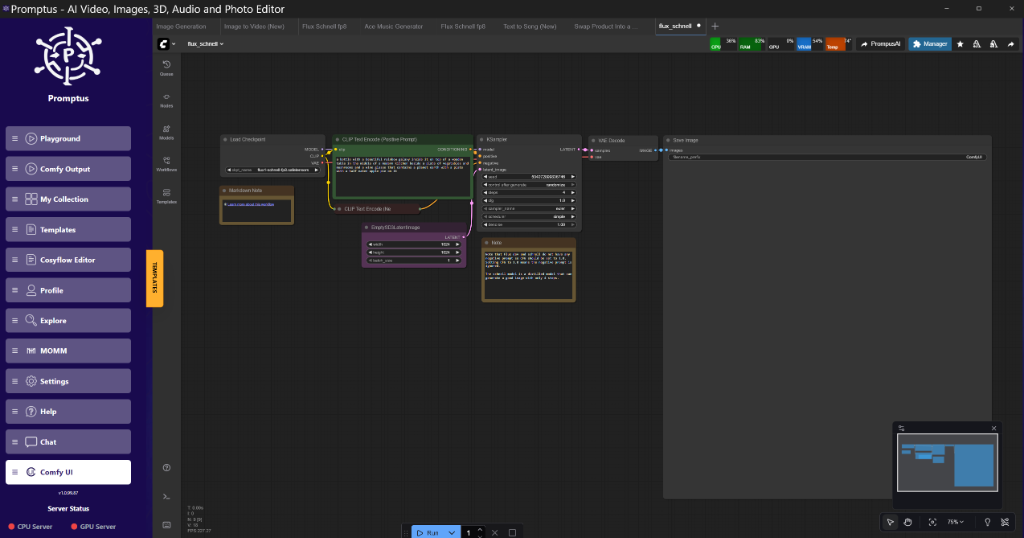
Instead of directly connecting the VAE Decode node to the KSampler output, insert a Tiled VAE Decode node. Configure the tile size to 512x512 pixels and the overlap to 64 pixels. This significantly reduces VRAM usage during the decode process. Tools like Promptus simplify prototyping these tiled workflows.
- SageAttention:
In your KSampler workflow, locate the attention modules. Replace the standard attention modules with SageAttentionPatch nodes. Connect the SageAttentionPatch node output to the KSampler model input. This reduces the memory footprint of the attention mechanism.
My Recommended Stack
For those serious about pushing the limits of AI image generation, I reckon a solid stack would include:
ComfyUI: For its flexibility and node-based workflow.
Promptus: To streamline prototyping and workflow iteration, especially for complex setups like tiled VAE decode.
A beefy GPU: Obviously, the more VRAM the better. But even with a mid-range card, these optimization techniques can make a big difference.
Insightful Q&A
Q: Can I use these techniques on other GPUs?
A: Aye, these techniques are not exclusive to the RTX 4090. Tiled VAE Decode, SageAttention, and block swapping can be used on any GPU with limited VRAM.
Q: Will these techniques slow down my rendering times?
A: Possibly. Tiled VAE Decode and block swapping can introduce some overhead. SageAttention might be faster in some cases, but it can also introduce visual artifacts. It's all about finding the right balance between VRAM usage and performance.
Q: Where can I find pre-made ComfyUI workflows that use these techniques?
A: The ComfyUI community is constantly sharing new workflows. Check online forums and model repositories for examples. Tools like Promptus can also help you find and adapt existing workflows.
Resources & Tech Stack
ComfyUI Official: The core node-based interface. All techniques discussed hinge on the flexibility of ComfyUI: ComfyUI Official
SageAttention: A memory-efficient attention mechanism for KSamplers.
Promptus AI: Streamlines workflow building in ComfyUI, aiding in rapid iteration of memory-saving setups: Promptus AI
Technical FAQ
Q: I'm getting "CUDA out of memory" errors. What can I do?
A: This usually means your GPU doesn't have enough VRAM to handle the current task. Try reducing the image resolution, lowering the batch size, or using VRAM optimization techniques like Tiled VAE Decode or SageAttention. You can also try closing other applications that are using GPU memory.
Q: What are the minimum hardware requirements for running Stable Diffusion XL?
Q: I'm getting seams when using Tiled VAE Decode. How can I fix this?
A: Increase the tile overlap. Community tests suggest an overlap of 64 pixels minimizes seams. Ensure your VAE is configured correctly.
Q: How do I offload model layers to the CPU using block swapping?
A: This depends on the specific ComfyUI nodes you're using. Look for nodes that allow you to specify the device (CPU or GPU) for each layer. Experiment with moving different layers to the CPU to find the optimal configuration. Start by swapping the first 3 transformer blocks to CPU and keeping the rest on the GPU.
Q: My renders are taking a very long time. What can I do to speed them up?
A: There are several factors that can affect rendering speed. Make sure you're using the latest drivers for your GPU. Reduce the number of steps in the KSampler. Experiment with different samplers and schedulers. Optimize your ComfyUI workflow by removing unnecessary nodes.
More Readings
Continue Your Journey (Internal 42.uk Research Resources)
Understanding ComfyUI Workflows for Beginners
Advanced Image Generation Techniques
VRAM Optimization Strategies for RTX Cards
Building Production-Ready AI Pipelines
Prompt Engineering Tips and Tricks
Exploring the Latest Stable Diffusion Models
Created: 22 January 2026