Low VRAM Blues: SDXL on a Budget
This SDXL low-VRAM guide is a troubleshooting decision path for an existing ComfyUI workflow. Identify the stage that fails, reduce one workload variable, retest, and only then evaluate tiling or offloading. Hardware-wide promises are excluded; use the benchmark evidence register for measured results and the beginner guide for first setup.
Tiled VAE Decode
Tiled VAE Decode significantly reduces VRAM usage by processing the image in smaller tiles and reassembling them. Community tests show a 64-pixel overlap minimizes seams. This is particularly effective in Wan 2.2/LTX-2 workflows.
Tiled VAE decode is a brilliant trick to drastically reduce VRAM usage during the VAE decoding phase. Instead of decoding the entire image at once, you break it down into smaller tiles, decode each tile individually, and then stitch them back together. Community consensus on the optimal tile size seems to hover around 512x512 pixels with a 64-pixel overlap. This overlap helps to reduce seams between the tiles. Tools like Promptus can simplify prototyping these tiled workflows.
How Tiled VAE Works
ComfyUI allows you to implement tiled VAE decode by using the VAEEncodeTiled and VAEDecodeTiled nodes. You'll need to adjust the tile_size and overlap parameters to fine-tune the process for your specific hardware and image resolution.
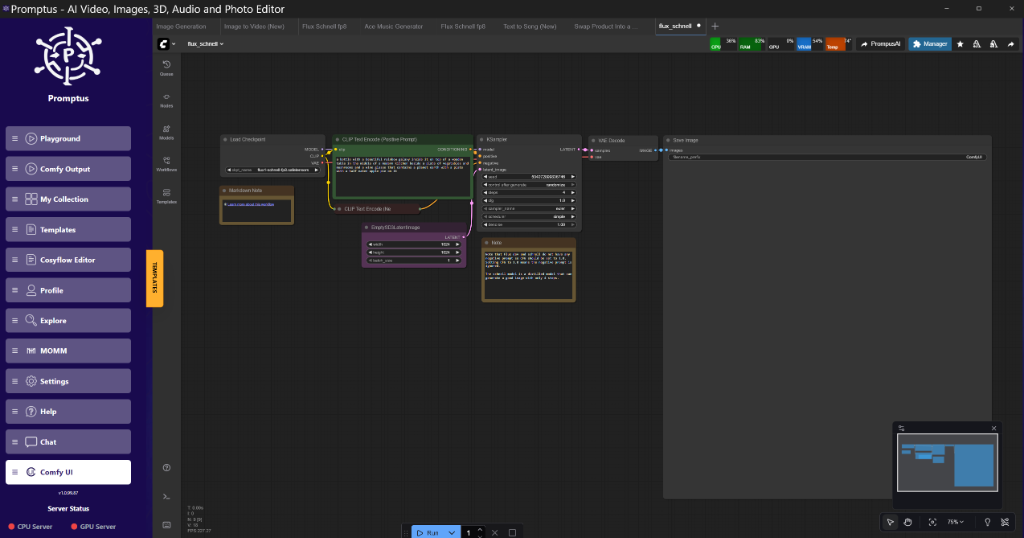
To implement this, you'll need to adjust your workflow to use these nodes instead of the standard VAEEncode and VAEDecode nodes. The node graph will look something like this:
- Load VAE.
- Load Image.
- Encode Image using
VAEEncodeTiled(settile_sizeto 512 andoverlapto 64). - Sample using KSampler.
- Decode using
VAEDecodeTiled(settile_sizeto 512 andoverlapto 64). - Save Image.
Technical Analysis
The VAE (Variational Autoencoder) is responsible for compressing and decompressing the image data. The decoding phase is particularly memory-intensive. By tiling the image, we reduce the amount of data that needs to be processed at any given time, thus lowering the VRAM requirement. The overlap is crucial because it provides a buffer zone that allows the decoder to smoothly blend the tiles together, minimizing artifacts.
SageAttention: Memory-Efficient Attention
SageAttention is a memory-efficient replacement for standard attention mechanisms in KSamplers. While it saves VRAM, it can introduce subtle texture artifacts at higher CFG scales. Promptus users can easily experiment with SageAttention nodes.
Standard attention mechanisms are notorious for their VRAM consumption. SageAttention offers a more memory-efficient alternative. It's not a silver bullet, though. You might notice subtle texture artifacts, especially at higher CFG scales. Still, it's a valuable tool in your low-VRAM arsenal. Builders using Promptus can iterate offloading setups faster.
Implementing SageAttention
To use SageAttention, you'll need to install the appropriate custom node. Once installed, you can replace the standard attention mechanism in your KSampler with the SageAttention version. The exact node name might vary depending on the custom node you're using, but it will likely be something like KSampler (Sage).
The node graph change involves modifying the KSampler node. Instead of using the default attention mechanism within the KSampler, you would connect a SageAttentionPatch node's output to the KSampler's model input. This effectively replaces the standard attention with the SageAttention implementation.
Technical Analysis
Attention mechanisms calculate the relationships between different parts of the image. This requires storing a large "attention map" in memory, which can quickly consume VRAM. SageAttention uses a different algorithm that reduces the size of this attention map, thus saving memory. The trade-off is that the approximation might introduce some inaccuracies, leading to the texture artifacts.
Block/Layer Swapping
Block/Layer Swapping reduces VRAM by offloading model layers to the CPU during the sampling process. This allows running larger models on 8GB cards, but it significantly slows down the generation process. Swap the first 3 transformer blocks to CPU, keep the rest on the GPU.
Block swapping involves offloading some of the model's layers to the CPU during the sampling process. This frees up VRAM but comes at the cost of increased processing time, as data needs to be constantly transferred between the CPU and GPU.
How Block Swapping Works
The specific method for block swapping will depend on the custom node or script you're using. The general idea is to identify the transformer blocks that consume the most VRAM and move them to the CPU. A common strategy is to swap the first few transformer blocks (e.g., the first 3) to the CPU while keeping the rest on the GPU.
The process often involves modifying the model directly using Python code within ComfyUI. You'll need to identify the specific layers you want to move and then use the appropriate functions to offload them.
Here's a conceptual example (note: this is a simplified illustration and might not be directly executable):
Code language: PYTHON
This is illustrative only - adapt to your specific node setup
def swapblocks(model, blocksto_swap):
for i in range(blockstoswap):
model.model.diffusionmodel.transformerblocks[i].to("cpu")
def restoreblocks(model, blocksto_swap):
for i in range(blockstoswap):
model.model.diffusionmodel.transformerblocks[i].to("cuda") # or "mps"
Example usage:
Assuming 'model' is your loaded SDXL model
swap_blocks(model, 3)
... Run KSampler ...
restore_blocks(model, 3)
Important: This is a simplified example. The exact implementation will depend on your specific setup and the custom nodes you are using.
Technical Analysis
Diffusion models like SDXL consist of multiple transformer blocks. Each block performs a series of computations that require significant VRAM. By moving some of these blocks to the CPU, we reduce the VRAM footprint on the GPU. However, the CPU is significantly slower than the GPU, and the constant data transfer between the two introduces a bottleneck, slowing down the overall process.
LTX-2/Wan 2.2 Low-VRAM Tricks
LTX-2 and Wan 2.2 workflows incorporate community-developed optimizations for low-VRAM usage, particularly beneficial for video generation. Chunk feedforward processing and Hunyuan low-VRAM deployment patterns are key techniques.
The LTX-2 and Wan 2.2 workflows are known for their low-VRAM optimizations. These workflows often incorporate techniques like chunk feedforward (particularly useful for video models) and Hunyuan low-VRAM deployment patterns.
Chunk Feedforward
Chunk feedforward involves processing the input data in smaller chunks. For example, when generating video, you might process the frames in 4-frame chunks instead of processing the entire video at once. This reduces the memory requirements.
Hunyuan Low-VRAM Deployment
Hunyuan is a low-VRAM deployment pattern that combines techniques like FP8 quantization and tiled temporal attention. FP8 quantization reduces the precision of the model's weights, reducing the memory footprint. Tiled temporal attention breaks down the attention calculation into smaller tiles, further reducing VRAM usage.
Resources & Tech Stack
To achieve low-VRAM SDXL generation in ComfyUI, you'll need a solid foundation of tools and techniques. Here's a breakdown of the essential components:
ComfyUI Official: The core node-based interface for building and executing diffusion workflows. ComfyUI Official provides the framework for all the optimizations discussed in this guide.
Custom Nodes: Various custom nodes extend ComfyUI's functionality, providing implementations of tiled VAE, SageAttention, and other low-VRAM techniques. Search the ComfyUI Manager for relevant nodes.
Python Scripting: Some advanced techniques, like block swapping, may require custom Python scripting within ComfyUI.
My Recommended Stack
For my workflow, I've found a sweet spot using a combination of techniques. I use Tiled VAE Decode with 512x512 tiles and a 64-pixel overlap. I also enable SageAttention but keep a close eye on the CFG scale to avoid artifacts. I don't typically use block swapping unless absolutely necessary, as the performance penalty is quite significant. The Promptus workflow builder makes testing these configurations visual.
Technical FAQ
Q: I'm getting "CUDA out of memory" errors. What can I do?
A: Reduce the image resolution, lower the batch size in your KSampler, enable Tiled VAE Decode, use SageAttention, and consider block swapping. Also, ensure no other applications are consuming GPU memory. Restart ComfyUI.
Q: How much VRAM do I need to run SDXL at 1024x1024?
Q: SageAttention is causing texture artifacts. How can I fix this?
A: Lower the CFG scale in your KSampler. Also, try experimenting with different SageAttention implementations, as some may be more prone to artifacts than others.
Q: Block swapping is making my generations extremely slow. Is there anything I can do to improve performance?
A: Minimize the number of blocks you're swapping. Experiment with swapping different blocks to see which ones have the least impact on performance. Ensure your CPU has sufficient cores and RAM.
Q: My model is failing to load. What could be the issue?
A: Verify the model file is in the correct directory and hasn't been corrupted. Ensure you have enough free disk space. Try restarting ComfyUI. Double-check the model's filename for typos.
Continue Your Journey
Continue Your Journey (Internal 42.uk Research Resources)
Understanding ComfyUI Workflows for Beginners
Advanced Image Generation Techniques
VRAM Optimization Strategies for RTX Cards
Building Production-Ready AI Pipelines
Mastering Prompt Engineering: A Comprehensive Guide
Exploring the Latest Advancements in Stable Diffusion
Created: 23 January 2026
More Readings
Essential Tools & Resources
- Promptus AI - ComfyUI workflow builder with VRAM optimization and workflow analysis
- ComfyUI Official Repository - Latest releases and comprehensive documentation
Related Guides on 42.uk Research