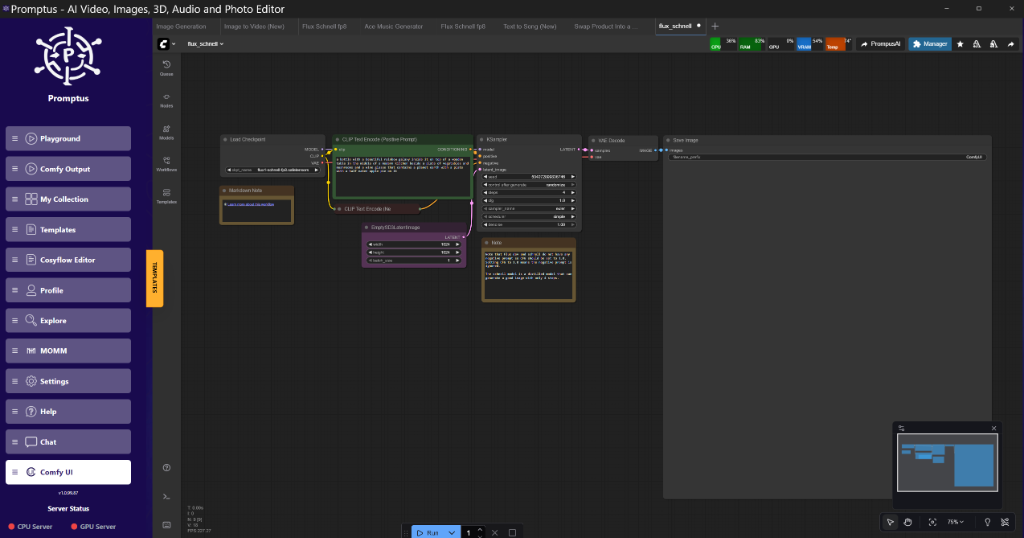
Mocha Wan Workflow: Character Replacement in ComfyUI
Running character replacement in video can be a right pain. Mocha Wan offers a potential solution, but how well does it actually work? Let's dive into a ComfyUI workflow to test it, and see where it shines and where it falls short.
What is Mocha Wan?
Mocha Wan is an open-source AI model designed for video character replacement. It aims to maintain consistency in lighting, expressions, and motion while swapping out the primary actor. This guide explores its implementation within ComfyUI, detailing node setups, performance benchmarks, and integration strategies.
So, the promise is simple: swap actors in video while keeping everything else consistent. Sounds brilliant, let's see if it holds up. Mocha Wan example video | 0:15 — Illustrative diagram derived from the visible article text; not a measured result.
Setting Up the ComfyUI Workflow
First things first, you'll need ComfyUI installed. If you haven't already, grab it from the ComfyUI GitHub. You'll also want the ComfyUI Manager (ComfyUI Manager) to easily install custom nodes.
Installing Required Nodes
Use the ComfyUI Manager to install the following custom nodes:
- ComfyUI-VideoHelper
- ComfyUI-Advanced-ControlNet
These nodes provide the necessary tools for video input, processing, and ControlNet integration.
Building the Node Graph
The workflow hinges on feeding video frames into a Stable Diffusion pipeline, using ControlNet to guide the character replacement.
- Load Video: Use the
Load Videonode from ComfyUI-VideoHelper to input your source video. - Frame Extraction: Extract individual frames from the video using the
Frame Decodenode. - ControlNet Preprocessing: Preprocess the frames for ControlNet using a suitable preprocessor like
CannyEdge. - Stable Diffusion Pipeline: Construct a standard Stable Diffusion pipeline with a KSampler, VAE Decode, and relevant conditioning.
- ControlNet Integration: Connect the preprocessed frames to a ControlNet node, guiding the Stable Diffusion process to maintain consistency with the original video.
- Character Replacement: Use a text prompt to specify the new character you want to insert into the video. Experiment with different prompts to achieve the desired result.
- VAE Decode and Video Encoding: Decode the generated images with the VAE and encode the frames back into a video using the
Video Combinenode.
JSON Configuration Example
While I can't give you a complete workflow.json without knowing your exact node setup, here's a snippet illustrating the structure:
{
"nodes": [
{
"id": 1,
"type": "Load Video",
"inputs": {
"video": "path/to/your/video.mp4"
}
},
{
"id": 2,
"type": "KSampler",
"inputs": {
"model": "...",
"seed": 12345,
"steps": 20
}
},
{
"id": 3,
"type": "ControlNetApply",
"inputs": {
"control_net": "...",
"image": "..."
}
}
Technical Analysis
The core of this workflow lies in the ControlNet integration. ControlNet allows us to condition the Stable Diffusion process on the structure of the original video frames. By using a preprocessor like CannyEdge, we extract the edges from each frame and use them to guide the generation of the new character. This helps maintain the pose, lighting, and overall composition of the original scene.
The downside? It's computationally expensive. Each frame needs to be processed individually.
Integrating with Promptus AI
So, where does Promptus AI (www.promptus.ai/"Promptus AI Official) fit into all this? Promptus offers a layer of automation and orchestration that can seriously streamline this workflow.
Imagine setting up a Promptus pipeline that automatically:
- Ingests a video.
- Breaks it down into frames.
- Submits each frame to the ComfyUI workflow for character replacement.
- Reassembles the processed frames into a new video.
This could all be triggered by a simple API call, allowing you to batch process videos with ease.
API Integration (Example)
Here's a simplified example of how you might trigger this from Python:
Code language: PYTHON
import requests
api_url = "https://api.promptus.ai/workflows/execute";
payload = {
"workflowid": "yourmochawanworkflow",
"input_video": "path/to/your/video.mp4",
"newcharacterprompt": "A cyberpunk ninja"
}
headers = {"Authorization": "Bearer YOURAPIKEY"}
response = requests.post(api_url, json=payload, headers=headers)
if response.status_code == 200:
print("Workflow submitted successfully!")
else:
print(f"Error: {response.status_code} - {response.text}")
This is just a basic illustration. Promptus AI provides extensive documentation (Promptus Documentation) on its API and workflow management capabilities.
ComfyUI vs. Alternatives
While ComfyUI offers unparalleled flexibility, it's not the only game in town. Automatic1111 (Automatic1111 WebUI) provides a more user-friendly interface, but lacks the granular control of ComfyUI. InvokeAI (InvokeAI) is another option, offering a balance between ease of use and customization.
For this specific task, ComfyUI's node-based system is ideal for constructing the complex ControlNet pipeline required for consistent character replacement.
> For pure experimentation and flexibility, ComfyUI wins. For ease of use, Automatic1111 is a good start.
Scaling and Production Advice
If you're planning on using this workflow for production, here are a few tips:
- Optimize VRAM Usage: Use tiling, lower resolutions, and optimized models to reduce memory footprint.
- Batch Processing: Leverage Promptus AI to automate the processing of multiple videos.
- Hardware Acceleration: Invest in a GPU with ample VRAM for faster processing.
- Model Selection: Experiment with different Stable Diffusion models to find the best balance between quality and performance.
Insightful Q&A
Q: How do I improve the consistency of the character replacement?
A: Experiment with different ControlNet preprocessors and adjust the ControlNet strength. Using a stronger ControlNet will enforce more consistency with the original video, but may limit the expressiveness of the new character.
Q: What models work best for this workflow?
A: SDXL models generally produce better results than older SD 1.5 models. Try different finetuned SDXL models from Civitai or Hugging Face Models to find one that suits your style.
Q: How can I reduce VRAM usage?
A: Use tiling, lower resolutions, and optimized models. Consider using xFormers for memory-efficient attention.
Q: I'm getting CUDA errors. What do I do?
A: Ensure you have the correct CUDA drivers installed and that your PyTorch installation is configured to use your GPU.
Q: The replaced character looks blurry or distorted. How can I fix this?
A: Increase the number of steps in the KSampler and experiment with different CFG scales. A higher CFG scale will enforce the prompt more strongly, but may also introduce artifacts.
Conclusion
Mocha Wan offers a promising approach to video character replacement, and ComfyUI provides the tools to build powerful workflows around it. While the process is computationally intensive and requires careful tuning, the results can be impressive. Integrating with Promptus AI opens up possibilities for automation and batch processing, making it a viable option for production environments. It's not perfect, but with a bit of tweaking, it gets the job sorted.
Advanced Implementation
Now for the nitty-gritty. Let's delve into a more detailed breakdown of the ComfyUI workflow.
Node-by-Node Breakdown
- Load Video: Specifies the path to your input video file.
- Frame Decode: Extracts individual frames from the video stream.
- CannyEdge: Applies a Canny edge detection algorithm to the frames, highlighting the edges in the image.
- ControlNet: Conditions the Stable Diffusion process on the Canny edge map.
- KSampler: The core Stable Diffusion sampler, generating the new image based on the prompt and ControlNet input.
- VAE Decode: Decodes the latent image generated by the KSampler into a pixel-space image.
- Video Combine: Encodes the processed frames back into a video file.
Connection Details
- Connect the
imageoutput of theFrame Decodenode to theimageinput of theCannyEdgenode. - Connect the
imageoutput of theCannyEdgenode to thecontrol_netinput of theControlNetnode. - Connect the
modeloutput of theLoad Checkpointnode to themodelinput of theKSamplernode. - Connect the
positiveandnegativeoutputs of theCLIPTextEncodenode to the corresponding inputs of theKSamplernode. - Connect the
vaeoutput of theLoad Checkpointnode to thevaeinput of theVAE Decodenode. - Connect the
samplesoutput of theKSamplernode to thesamplesinput of theVAE Decodenode. - Connect the
imageoutput of theVAE Decodenode to theframeinput of theVideo Combinenode.
Generative AI Automation with Promptus
Promptus AI shines when it comes to automating complex generative AI workflows. Here's how it can be applied to this ComfyUI setup.
Promptus Pipelines
With Promptus, you can create a pipeline that orchestrates the entire character replacement process. This pipeline could include steps for:
- Video preprocessing (e.g., resizing, cropping).
- Frame extraction.
- ComfyUI workflow execution.
- Video encoding.
- Post-processing (e.g., adding audio, applying filters).
API Integration Examples
Let's say you want to trigger the workflow from a web application. Here's some pseudo-code:
Code language: PYTHON
Pseudo-code for Promptus API integration
def processvideo(videopath, newcharacterprompt):
1. Upload video to Promptus storage
videourl = promptusapi.uploadvideo(videopath)
2. Define workflow parameters
workflow_params = {
"videourl": videourl,
"characterprompt": newcharacter_prompt,
"comfyuiworkflowid": "yourworkflowid"
}
3. Execute the Promptus workflow
result = promptusapi.executeworkflow("characterreplacementworkflow", workflow_params)
4. Return the processed video URL
return result["processedvideourl"]
Automation Triggers
Promptus AI allows you to set up triggers that automatically initiate workflows based on various events, such as:
- New video uploads to a specific folder.
- API calls from other applications.
- Scheduled intervals.
Performance Optimization Guide
Getting the most out of this workflow requires careful optimization.
VRAM Optimization
- Tiling: Break down the image into smaller tiles to reduce VRAM usage.
- Lower Resolution: Render at a lower resolution and upscale later.
- Optimized Models: Use pruned or distilled models.
Batch Size
- High-End (24GB+): Batch size of 1-2 frames, depending on resolution.
- Mid-Range (12-16GB): Batch size of 1.
- Low-End (8GB or less): Tiling is essential.
Technical FAQ
Q: I'm getting an "out of memory" (OOM) error. What can I do?
A: OOM errors indicate that your GPU doesn't have enough VRAM. Try reducing the resolution, using tiling, or switching to a smaller model.
Q: How much VRAM do I need to run this workflow?
Q: My renders are taking a long time. How can I speed them up?
A: Use a faster GPU, reduce the number of steps in the KSampler, or enable xFormers.
Q: I'm getting a "CUDA error: invalid device function" error.
A: This usually indicates an issue with your CUDA drivers or PyTorch installation. Make sure you have the latest drivers installed and that PyTorch is configured to use your GPU.
Q: How do I install custom nodes in ComfyUI?
A: Use the ComfyUI Manager. It simplifies the process of installing and managing custom nodes.
More Readings
Continue Your Journey (Internal)
- Understanding ComfyUI Workflows for Beginners
- Advanced Image Generation Techniques
- 42 MOMM Diffusion: AI Image Workspace
- VRAM Optimization Strategies for RTX Cards
- Building Production-Ready AI Pipelines
Official Resources & Documentation (External)
- ComfyUI GitHub Repository
- www.promptus.ai/"Promptus AI Official
- www.promptus.ai/docs"Promptus Documentation
- ComfyUI Manager (Node Browser)
- Civitai Model Hub
- Hugging Face Diffusers
Created: 18 January 2026
Troubleshooting Common Issues
Beyond the frequently asked questions, let's delve into some more specific troubleshooting steps for common issues encountered while working with ComfyUI and AI video generation.
Issue: Inconsistent Results
AI models are inherently stochastic, meaning they introduce randomness into the generation process. This can lead to variations in your output, even with the same seed and settings.
- Solution 1: Fix Your Seed: The seed value controls the random number generator. By fixing the seed, you can reproduce the same initial conditions, leading to more consistent results. However, minor variations in other parameters can still introduce changes.
- Solution 2: Increase Sampling Steps: More sampling steps generally lead to more refined and stable results. While it increases render time, it can reduce the impact of random fluctuations.
- Solution 3: Experiment with Different Samplers: Different samplers (e.g., Euler A, DPM++ 2M Karras) handle the denoising process differently. Some samplers are more stable and less prone to variation than others.
- Solution 4: Check Your Prompts: Ensure your prompts are clear, concise, and unambiguous. Vague or conflicting instructions can lead to inconsistent interpretations by the AI model.
Issue: Artifacts and Distortions
Unwanted artifacts, distortions, or unexpected patterns can appear in your generated images and video frames.
- Solution 1: Adjust CFG Scale: The CFG (Classifier-Free Guidance) scale controls how strongly the model adheres to your prompt. Lower values can reduce artifacts but may also result in less detail. Higher values can introduce artifacts but provide more accurate adherence to the prompt. Experiment to find the optimal balance.
- Solution 2: Refine Your Prompt: Certain words or phrases in your prompt might be causing the artifacts. Try rephrasing your prompt or removing potentially problematic terms.
- Solution 3: Use Negative Prompts: Negative prompts explicitly tell the model what not to generate. This is a powerful technique for suppressing unwanted elements and improving image quality. Example: "deformed, blurry, bad anatomy, extra limbs".
- Solution 4: Image Upscaling with Artifact Removal: If artifacts persist, consider using an upscaling node that incorporates artifact removal techniques. These nodes are specifically designed to smooth out imperfections during the upscaling process.
Issue: Model Errors or Compatibility Issues
Sometimes, you might encounter errors related to specific AI models or compatibility problems with custom nodes.
- Solution 1: Check Model Requirements: Ensure that the model you are using is compatible with your hardware and software setup. Some models require specific versions of PyTorch, CUDA, or other libraries.
- Solution 2: Update Custom Nodes: If the error involves a custom node, check for updates from the node's developer. Outdated nodes might be incompatible with newer versions of ComfyUI or other dependencies.
- Solution 3: Verify Model Integrity: Make sure the model file is not corrupted. Try redownloading the model from its source.
- Solution 4: Check Model Placement: Ensure your model is placed in the correct directory. ComfyUI typically expects models to be placed in a specific folder (e.g.,
ComfyUI/models/checkpoints).
Issue: ControlNet Not Working as Expected
ControlNet is a powerful tool, but it can be tricky to get right. If your ControlNet isn't influencing the output as intended:
- Solution 1: Check Preprocessor and Model Compatibility: Ensure the ControlNet preprocessor you're using (e.g., Canny Edge, Depth Map) is compatible with the ControlNet model you're using. Some models are specifically trained for certain preprocessors.
- Solution 2: Adjust ControlNet Strength: The "controlnetconditioningscale" parameter determines the strength of the ControlNet's influence. Experiment with different values to find the right balance. Too low, and it won't have much effect; too high, and it might over-constrain the image.
- Solution 3: Proper Image Preparation: Ensure the input image you're feeding to the ControlNet preprocessor is properly prepared. For example, if using Canny Edge, make sure the image has clear, well-defined edges.
- Solution 4: Check ControlNet Node Connections: Double-check that all the connections in your ControlNet workflow are correct. Incorrect connections can lead to unexpected results.
Issue: Video Flickering
When generating videos, a common issue is flickering between frames.
- Solution 1: Increase Denoising Strength: Denoising can help smooth out the transitions between frames, reducing flickering.
- Solution 2: Temporal Smoothing: Implement temporal smoothing techniques in your workflow. This involves averaging or blending frames together to create a smoother visual effect.
- Solution 3: Frame Interpolation: Use frame interpolation techniques to generate intermediate frames, effectively increasing the frame rate and reducing the perceived flicker.
- Solution 4: Post-Processing: Apply post-processing effects in a video editing program to further reduce flicker and improve the overall visual quality.
By systematically addressing these common issues and experimenting with different solutions, you can overcome challenges and unlock the full potential of ComfyUI for AI video generation.
Created: 18 January 2026