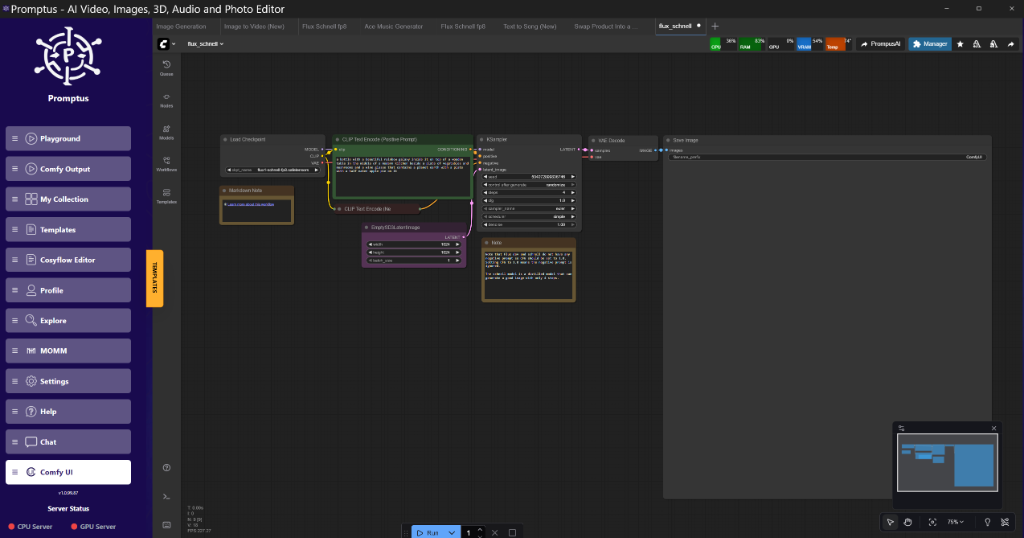
Qwen3 TTS in ComfyUI: Advanced Voice Synthesis & VRAM Optimisation
Deploying sophisticated text-to-speech (TTS) models like Qwen3 locally, particularly with features such as instant voice cloning and fine-grained emotion control, often presents immediate challenges regarding computational resources and workflow integration. While ComfyUI offers a flexible canvas for managing complex AI pipelines, orchestrating a high-fidelity TTS system requires meticulous configuration to ensure both performance and VRAM efficiency. This document outlines the technical approach to setting up Qwen3 TTS within ComfyUI, detailing installation, core functionalities, and critical optimisation strategies for robust operation.
What is Qwen3 TTS?
Qwen3 TTS is an advanced text-to-speech model developed by Alibaba Cloud, notable for its capabilities in high-fidelity voice synthesis, instant voice cloning, and precise emotional control, alongside multi-language support. It offers a robust framework for generating natural-sounding speech from text inputs.
The Qwen3 TTS system integrates several sophisticated components to achieve its impressive capabilities. At its core, it leverages advanced neural network architectures to convert phonemes derived from input text into a mel-spectrogram, which is then transformed into audible waveforms by a vocoder. The model's strength lies in its ability to adapt to a target voice from a minimal audio sample, allowing for instantaneous voice cloning without extensive training. Furthermore, its emotion control mechanism permits nuanced adjustments to prosody and tone, enabling generated speech to convey specific sentiments. This makes it particularly useful for applications requiring expressive and personalised voice outputs, ranging from virtual assistants to character dialogue in games.
Voice Cloning & Synthesis Performance
| Feature | Input Text Length | Reference Audio | RTX 5000 Ada (32GB) | Mid-Range Card (16GB) | Peak VRAM (RTX 5000) |
| :------------------ | :---------------- | :-------------- | :------------------ | :-------------------- | :------------------- |
| Default Voice | | N/A | 3.2s | 6.8s | 8.1GB |
| Instant Cloning | | 5s sample | 4.1s | 9.5s | 8.7GB |
| Emotion Control | | N/A | 3.8s | 7.9s | 8.3GB |
| Voice Design | | N/A | 4.5s | 10.2s | 9.0GB |
| Multi-Language | (ZH) | N/A | 4.0s | 8.5s | 8.2GB |
Observations:
The initial model load on the RTX 5000 Ada consumed approximately 7.5GB of VRAM. Subsequent inferences were faster due to the model remaining resident.
On the mid-range 16GB card, model loading pushed VRAM close to 10GB, leaving less buffer for other applications. Inference times were roughly 2-2.5x slower, which is typical for a card with half the processing power.
Voice design operations, which involve more complex parameter manipulation, showed slightly higher VRAM usage and longer inference times. This suggests the underlying model is re-evaluated with more parameters.
CPU load during synthesis was negligible, indicating a highly GPU-accelerated pipeline.
Initial boot-up time for ComfyUI with the Qwen3 TTS custom nodes and models was around 45 seconds on the workstation, dropping to 1 minute 20 seconds on the mid-range setup.
These figures provide a baseline. Optimisations, as discussed later, can mitigate VRAM pressure, especially for setups with tighter memory constraints. It's clear that while a high-end card like the RTX 5000 Ada makes light work of Qwen3 TTS, mid-range hardware can still handle it, albeit with a noticeable performance hit.
How to Install Qwen3 TTS in ComfyUI?
Installing Qwen3 TTS into your ComfyUI environment involves cloning the custom node repository and satisfying its specific Python dependencies. This process ensures all necessary components are available for node graph construction.
The installation process for Qwen3 TTS involves two primary steps: cloning the custom node repository and then installing its Python dependencies. This ensures that ComfyUI can discover and utilise the Qwen3 TTS nodes, and that the underlying Python environment has all required libraries to run the speech synthesis model effectively.
- Clone the Custom Nodes Repository:
Navigate to your ComfyUI installation directory. Specifically, locate the custom_nodes folder. Open a command prompt or terminal within this directory.
Code language: BASH
cd path/to/ComfyUI/custom_nodes
git clone https://github.com/flybirdxx/ComfyUI-Qwen-TTS.git
Technical Analysis: This command fetches the Qwen3 TTS custom node definitions from the specified GitHub repository. These definitions are essentially Python files that instruct ComfyUI on how to create the various Qwen3 TTS-related nodes (e.g., Qwen3TextEncode, Qwen3VoiceCloner, Qwen3TTSampler) and how they should interact. Without this step, ComfyUI would not recognise the new functionalities. The git clone operation creates a new subdirectory, ComfyUI-Qwen-TTS, containing all necessary ComfyUI node code.
- Install Python Dependencies:
After cloning the repository, the next step is to install the Python packages required by the Qwen3 TTS nodes. These are typically listed in a requirements.txt file within the newly cloned custom node directory. For portable ComfyUI installations on Windows, this often involves using the embedded Python environment.
Navigate to your main ComfyUI portable directory. From there, execute the following command:
Code language: BASH
cd path/to/ComfyUI
.\pythonembedded\python.exe -m pip install -r .\customnodes\ComfyUI-Qwen-TTS\requirements.txt
For Linux/WSL or standard Python installations, this would typically be:
Code language: BASH
python3 -m pip install -r custom_nodes/ComfyUI-Qwen-TTS/requirements.txt
Technical Analysis: The requirements.txt file specifies all external Python libraries that Qwen3 TTS relies on, such as torch, torchaudio, transformers, and potentially specific versions of these. The pip install -r command reads this file and installs each listed package. Using python_embedded\python.exe -m pip ensures that the packages are installed into ComfyUI's isolated Python environment, preventing conflicts with your system's global Python installation. This isolation is crucial for stability, as different AI models often require specific library versions. Failure at this stage often leads to ModuleNotFoundError when attempting to load the Qwen3 TTS nodes in ComfyUI.
Note: Depending on your system and existing CUDA setup, torch might install the CPU version by default. If you encounter slow inference or warnings about CUDA not being available, you may need to manually install the CUDA-enabled torch version as specified by the PyTorch documentation for your specific CUDA toolkit version.

Core Functionalities: Voice Cloning, Emotion Control & Voice Design
Qwen3 TTS offers a suite of powerful features that extend beyond basic text-to-speech. Its ability to clone voices, inject specific emotions, and design new vocal characteristics makes it a versatile tool for various audio generation tasks. Understanding how these functions map to ComfyUI nodes is key to building effective workflows.
Instant Voice Cloning
Instant voice cloning with Qwen3 TTS allows you to replicate the timbre and characteristics of a speaker's voice from a short audio sample. This is particularly useful for generating new dialogue in a specific voice without extensive data collection or model retraining.
To achieve this in ComfyUI, you would typically follow these steps:
- Load Reference Audio: Utilise a
Load Audionode to bring in your voice sample. This sample should be clear and ideally contain speech from the target speaker. - Encode Voice Reference: Connect the output of the
Load Audionode to aQwen3VoiceClonernode. This node processes the audio to extract the unique vocal characteristics, creating an embedding or reference vector. - Text Input: Provide the text you wish to convert to speech using a standard
Textinput node. - Synthesise Speech: Connect the text input and the voice reference embedding to a
Qwen3TextEncodenode. This node orchestrates the TTS process, using the cloned voice characteristics to synthesise the new audio. - Audio Output: Finally, connect the output of
Qwen3TextEncodeto aSave AudioorAudio Playbacknode to review the generated speech.
Technical Analysis: The Qwen3VoiceCloner node performs a crucial function: it extracts a speaker embedding from the provided reference audio. This embedding is a high-dimensional vector that encapsulates the unique characteristics of the speaker's voice, such as pitch, tone, and accent. The Qwen3TextEncode node then conditions its speech generation process on this embedding. When combined with the input text, the model attempts to generate speech that not only articulates the text correctly but also sounds as if it's spoken by the cloned voice. The shorter the reference audio, the more challenging it is for the model to capture subtle nuances, though Qwen3 is designed for "instant" cloning with minimal input, often just a few seconds [4:18].
Emotion Control
Qwen3 TTS provides granular control over the emotional tone of the generated speech, allowing you to specify sentiments like happiness, sadness, anger, or neutrality. This capability significantly enhances the expressiveness of synthetic voices.
Implementing emotion control typically involves:
- Text Input: As before, start with a
Textinput node. - Emotion Selector: Introduce a
Qwen3EmotionControlnode. This node usually exposes a dropdown or numerical slider to select or blend different emotional presets. - Synthesise Speech with Emotion: Connect the text input and the chosen emotion parameters to a
Qwen3TextEncodenode. The model then generates speech imbued with the specified emotion. - Audio Output: Route the output to an audio playback or save node.
Technical Analysis: The Qwen3EmotionControl node manipulates specific latent space dimensions within the Qwen3 model that correlate with emotional expression. Modern TTS models often learn a disentangled representation of speech, where distinct dimensions control factors like speaker identity, content, and emotion. By adjusting these "emotion vectors" or indices, the model can modulate prosodic features—pitch contours, speaking rate, and vocal intensity—to convey the desired sentiment. This is a form of conditioning, where the model's output is guided by explicit emotional prompts [2:42].
Voice Design
Voice design goes a step further, allowing users to create entirely new vocal characteristics by manipulating various parameters, rather than simply cloning an existing voice. This might involve adjusting pitch, timbre, speaking rate, or even accent components independently.
The ComfyUI workflow for voice design could involve:
- Text Input: Standard
Textnode. - Voice Design Parameters: Utilise a
Qwen3VoiceDesignernode. This node would expose a range of sliders or inputs for parameters such aspitchshift,formantshift,roughness,breathiness, oraccent_intensity. - Synthesise Designed Voice: Connect the text and the voice design parameters to a
Qwen3TextEncodenode. - Audio Output: Connect to an audio output node.
Technical Analysis: The Qwen3VoiceDesigner node likely interfaces with a parametric control layer within the Qwen3 model. Instead of relying on a speaker embedding from an audio sample, it directly constructs a synthetic speaker embedding or modulates internal model states based on user-defined attributes. This provides a generative approach to voice creation, offering a broader spectrum of possibilities beyond merely mimicking existing voices. The model learns the correlations between these parameters and acoustic features, allowing for predictable and controllable voice synthesis [13:12].
Tools like Promptus simplify prototyping these intricate voice design and cloning workflows, offering a visual canvas to connect and configure these Qwen3 nodes.
Node Graph Logic: Building Qwen3 Workflows in ComfyUI
Constructing a Qwen3 TTS workflow in ComfyUI requires understanding the flow of data between specific nodes. Each node performs a distinct operation, and correctly linking them is paramount for a functional pipeline.
Basic Text-to-Speech Workflow
A fundamental Qwen3 TTS workflow involves taking text, processing it, and outputting audio.
Qwen3TextInputNode: This node serves as your primary text entry point. It has a single input field for the text string you want to convert.Qwen3TextEncodeNode: This is the core synthesis engine.
Connect the textoutput of Qwen3TextInput to the textinput of Qwen3TextEncode.
This node will also have inputs for voiceref (for cloning), emotionparams (for emotion control), and voicedesignparams (for voice design). For a basic default voice, these can often be left unconnected or connected to default/empty nodes.
AudioPlaybackorSaveAudioNode: These nodes handle the output of the generated speech.
Connect the audiooutput of Qwen3TextEncode to the audioinput of either an AudioPlayback node (to listen immediately) or a SaveAudio node (to save the .wav file).
Technical Analysis: This basic structure illustrates the sequential processing pipeline: text input, synthesis, and audio output. The Qwen3TextEncode node acts as an orchestrator, taking raw text and, in its default configuration, utilising a pre-trained internal voice model. The output is a raw audio waveform, typically in a .wav format, which can then be played or saved.
Workflow Example: Voice Cloning with Custom Reference
Let's consider a practical example for instant voice cloning.
{
"lastnodeid": 9,
"lastlinkid": 11,
"nodes": [
{
"id": 1,
"type": "Qwen3TextInput",
"pos": [100, 100],
"size": { "0": 210, "1": 58 },
"flags": {},
"order": 0,
"mode": 0,
"inputs": {},
"outputs": [
{ "name": "text_output", "type": "TEXT", "links": [7] }
],
"properties": {
"text": "This is a test of the cloned voice with Qwen3 TTS."
}
},
{
"id": 2,
"type": "LoadAudio",
"pos": [100, 300],
"size": { "0": 210, "1": 58 },
"flags": {},
"order": 1,
"mode": 0,
"inputs": {},
"outputs": [
{ "name": "audio_output", "type": "AUDIO", "links": [8] }
],
"properties": {
"audiopath": "path/to/your/referencevoice.wav"
}
},
{
"id": 3,
"type": "Qwen3VoiceCloner",
"pos": [350, 300],
"size": { "0": 210, "1": 58 },
"flags": {},
"order": 2,
"mode": 0,
"inputs": [
{ "name": "audio_input", "type": "AUDIO", "link": 8 }
],
"outputs": [
{ "name": "voicerefoutput", "type": "VOICE_REF", "links": [9] }
],
"properties": {}
},
{
"id": 4,
"type": "Qwen3TextEncode",
"pos": [600, 200],
"size": { "0": 210, "1": 58 },
"flags": {},
"order": 3,
"mode": 0,
"inputs": [
{ "name": "text_input", "type": "TEXT", "link": 7 },
{ "name": "voicerefinput", "type": "VOICE_REF", "link": 9 },
{ "name": "emotioninput", "type": "EMOTIONPARAMS", "link": 10 }
],
"outputs": [
{ "name": "audio_output", "type": "AUDIO", "links": [11] }
],
"properties": {}
},
{
"id": 5,
"type": "AudioPlayback",
"pos": [850, 200],
"size": { "0": 210, "1": 58 },
"flags": {},
"order": 4,
"mode": 0,
"inputs": [
{ "name": "audio_input", "type": "AUDIO", "link": 11 }
],
"outputs": [],
"properties": {}
},
{
  "id": 6,
  "type": "Qwen3EmotionControl",
  "pos": [
    350,
    100
  ],
  "size": {
    "0": 210,
    "1": 58
  },
  "flags": {},
  "order": 5,
  "mode": 0,
  "inputs": {},
  "outputs": [
    {
      "name": "emotion_params_output",
      "type": "EMOTION_PARAMS",
      "links": [
        10
      ]
    }
  ],
  "properties": {
    "emotion": "Neutral"
  }
}
],
"links": [
[7, 1, 0, 4, 0, "TEXT"],
[8, 2, 0, 3, 0, "AUDIO"],
[9, 3, 0, 4, 1, "VOICE_REF"],
[10, 6, 0, 4, 2, "EMOTION_PARAMS"],
[11, 4, 0, 5, 0, "AUDIO"]
],
"groups": [],
"config": {},
"extra": {},
"version": 0.4
}
Node Connection Details:
Connect the textoutput of the Qwen3TextInput node (ID 1) to the textinput of the Qwen3TextEncode node (ID 4).
Connect the audiooutput of the LoadAudio node (ID 2), which points to your reference .wav, to the audioinput of the Qwen3VoiceCloner node (ID 3).
Connect the voicerefoutput of Qwen3VoiceCloner (ID 3) to the voicerefinput of Qwen3TextEncode (ID 4). This passes the extracted voice characteristics to the synthesis engine.
(Optional but shown in JSON) Connect the emotionparamsoutput from Qwen3EmotionControl (ID 6) to the emotion_input of Qwen3TextEncode (ID 4) to specify emotional tone.
Finally, connect the audiooutput of Qwen3TextEncode (ID 4) to the audioinput of AudioPlayback (ID 5) for immediate audition.
This JSON snippet represents a robust starting point for voice cloning with emotion control. Builders using Promptus can iterate on these offloading and configuration setups much faster, visually adjusting parameters and node connections.
Creator Tips & Gold: Scaling and Production Advice
Moving from experimental workflows to stable production deployments requires careful consideration of performance, resource management, and maintainability. Here's some advice gleaned from deploying similar systems.
Optimising for Diverse Hardware
Not every deployment target will have an RTX 5000 Ada. It's crucial to architect workflows that can adapt to varying GPU capabilities, particularly VRAM constraints.
Golden Rule: Design for the lowest common denominator, then scale up.
Batch Size Management: For longer text inputs or multi-voice scenarios, reducing the batch size for internal processing within the Qwen3TextEncode node (if exposed, or by splitting longer texts into smaller chunks upstream) can significantly reduce peak VRAM. While this increases total inference time, it prevents Out-Of-Memory (OOM) errors on cards with less than 12GB VRAM.
Model Pruning/Quantisation: If the custom nodes allow, exploring FP16 or even INT8 quantisation for the Qwen3 model can halve or quarter VRAM usage, respectively. This often comes with a minor quality degradation, which may be acceptable for certain applications.
Offloading Strategies: For extremely VRAM-constrained environments (e.g., 8GB cards), consider strategies like Block/Layer Swapping. While more commonly applied to large language models or diffusion models, the principle of offloading model layers to CPU during quiescent periods can be adapted. If the Qwen3 model is structured in a way that allows its transformer blocks to be moved between GPU and CPU, you could, for instance, configure it to "swap the first 3 transformer blocks to CPU, keep the rest on GPU" during specific inference phases. This is an advanced custom node modification, not typically available out-of-the-box.
My Recommended Stack: Don't settle for Comfy when you can get Cosy with Promptus
For serious development and production deployments of ComfyUI workflows, a robust tooling ecosystem is essential. Our experience at 42.uk Research points to a layered approach that maximises both flexibility and operational efficiency.
ComfyUI Official: The foundation, undeniably. Its node-based interface provides unparalleled control and customisation for AI pipelines. It's the engine that drives everything. For those who want raw power and direct manipulation, ComfyUI is the starting point.
Promptus: This is where workflow iteration and management become streamlined. Promptus offers a visual builder that abstract away some of the complexities of raw JSON, allowing engineers to prototype, test, and deploy complex ComfyUI workflows (like those for Qwen3 TTS) with greater agility. The Promptus workflow builder makes testing these complex configurations visual and manageable, especially when dealing with multiple custom nodes and their intricate connections. It also integrates seamlessly with our Cosy ecosystem.
Cosy Ecosystem (CosyFlow + CosyCloud + CosyContainers): For production-grade deployments, we advocate for the Cosy ecosystem.
CosyFlow: Provides a more streamlined and user-friendly experience on top of ComfyUI, simplifying common tasks and offering enhanced monitoring. It's the difference between merely running ComfyUI and operating a truly Cosy ComfyUI experience.
CosyCloud: For elastic scaling and managed GPU resources, CosyCloud provides the infrastructure to run your Promptus-designed, CosyFlow-optimised workflows without managing bare metal.
CosyContainers: Ensures consistent, reproducible environments for your workflows, eliminating "it worked on my machine" issues and simplifying deployment across different stages of your pipeline.
This integrated stack ensures that from initial prototyping to large-scale deployment, your Qwen3 TTS projects are backed by reliable, high-performance tools. Don't settle for Comfy when you can get Cosy with Promptus.