SDXL Tiled Upscale: The Definitive 4K Guide
SDXL at 4K is a beast. Forget blurry upscales. We're pitting SeedVR2 Video Upscaler against the classic SDXL Tiled Upscale to find the ultimate 4K solution. Which one keeps skin texture sharpest? How do we tame the VRAM demands for serious CGI work? Let's sort it out.
What are SeedVR2 and SDXL Tiled Upscale?
SeedVR2 is a custom ComfyUI node for video upscaling, focusing on temporal consistency and detail preservation. SDXL Tiled Upscale is a technique that splits images into tiles for processing, reducing VRAM usage. Both aim to enhance image resolution while minimizing artifacts.
SDXL’s native resolution can leave something to be desired when blown up to 4K. Simple upscaling methods often result in a blurry, unsatisfying image. This guide explores two robust methods for achieving crisp, detailed 4K upscales within ComfyUI.
SeedVR2 Deep Dive
What is SeedVR2?
SeedVR2 is a custom node designed for video upscaling in ComfyUI. It leverages temporal information across frames to reduce flickering and maintain visual consistency during upscaling. This results in smoother, more natural-looking upscaled video.
numz/ComfyUI-SeedVR2_VideoUpscaler is the repository you’ll want. It’s designed for maintaining temporal consistency in video upscaling, a crucial factor often overlooked. The key here is its handling of frame-to-frame coherence, which minimizes flickering and shimmering effects.
Node Graph Logic
It works by analyzing multiple frames simultaneously, using optical flow to track motion and align details. This allows it to fill in missing information during the upscaling process more accurately.
- Load your video frames.
- Feed them into the SeedVR2 node.
- Configure the upscale factor.
- Output the upscaled video.
Golden Rules
Don't oversharpen. SeedVR2 already adds detail.
Experiment with different optical flow settings. They impact temporal stability.
Technical Analysis
SeedVR2 shines in scenarios where temporal consistency is paramount, such as upscaling animation or footage with subtle movements. The optical flow analysis adds a layer of complexity but significantly improves the final result.
SDXL Tiled Upscale Breakdown
What is SDXL Tiled Upscale?
SDXL Tiled Upscale is a VRAM-saving technique that splits a large image into smaller tiles for processing within ComfyUI. By processing these tiles individually, it avoids exceeding GPU memory limits, allowing for high-resolution image generation on less powerful hardware. Once processed, the tiles are seamlessly reassembled to form the final image.
This method breaks the image into smaller chunks. Each tile gets processed individually, keeping VRAM usage down. It’s a brilliant workaround for memory limitations.
Node Graph Logic
- Load your image.
- Split it into tiles using a Tiling node.
- Process each tile through your SDXL workflow.
- Stitch the tiles back together using a Combine node.
ComfyUI Implementation
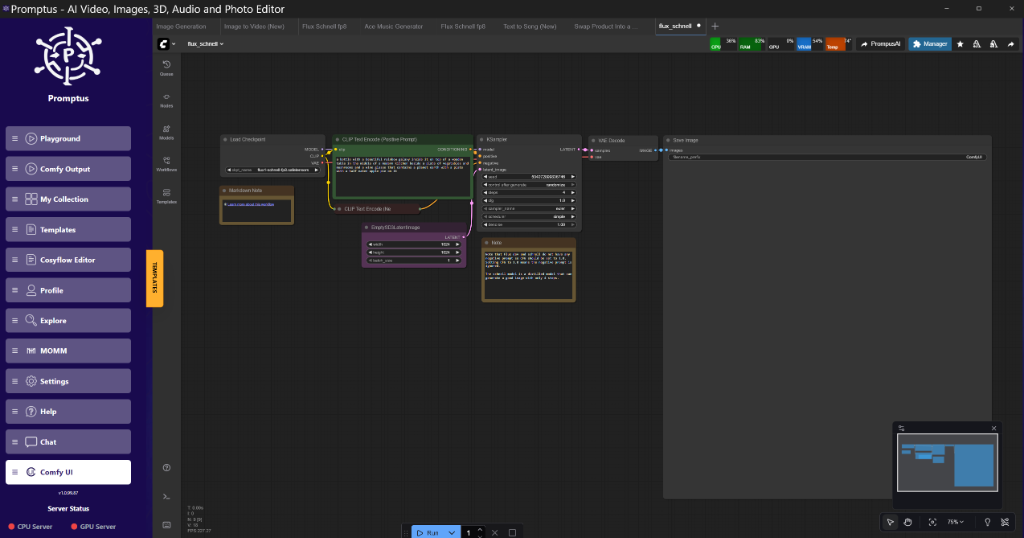
Here's a glimpse of the ComfyUI JSON config for a tiling setup:
{
"nodes": [
{
"id": 1,
"type": "LoadImage",
"inputs": {
"image": "path/to/your/image.png"
}
},
{
"id": 2,
"type": "Tiling",
"inputs": {
"image": 1,
"tile_size": 512,
"overlap": 64
}
},
{
"id": 3,
"type": "SDXLWorkflow",
"inputs": {
"image": 2,
"prompt": "A detailed landscape"
}
},
{
"id": 4,
"type": "CombineTiles",
"inputs": {
"tiles": 3,
"original_size": [4096, 4096]
}
}
Golden Rules
Overlap your tiles. This minimizes seams.
Keep tile sizes consistent. Uneven tiles can cause artifacts.
Technical Analysis
SDXL Tiled Upscale is a life-saver for lower-VRAM cards. The trade-off? It can introduce seams if not handled carefully. Overlapping tiles and blending techniques are crucial for a seamless result. The Tiling and CombineTiles nodes are your best friends here.
Tool Comparisons
SeedVR2 excels at video, while Tiled Upscale handles stills well, especially with VRAM constraints. Promptus.ai streamlines prototyping these tiled workflows.
Here's a table summarizing the strengths and weaknesses:
| Feature | SeedVR2 | SDXL Tiled Upscale |
| ---------------- | ------------------------------- | --------------------------------- |
| Input | Video | Still Images |
| VRAM Usage | Higher | Lower |
| Temporal Coherency | Excellent | N/A |
| Artifacts | Minimal, potential for blurring | Seams if not properly configured |
| Complexity | Moderate | Moderate |
Creator Tips & Gold
Scale up your source image intelligently. Don’t start with a potato. A decent 1024x1024 image will yield far better 4K results than upscaling a 512x512 image.
My Recommended Stack
ComfyUI is the foundation. Promptus AI simplifies workflow iteration. For demanding tasks, consider cloud GPUs.
Here's my go-to setup:
- ComfyUI: For node-based workflow control.
- Promptus AI: To visually design and optimize workflows.
- Tiled VAE Decode: For VRAM savings.
- High-VRAM GPU: A 3090 or better.
Promptus workflows can be easily adapted with tiled VAE decode for lower VRAM usage.
Insightful Q&A
Q: How do I reduce VRAM usage in ComfyUI?
A: Tiled VAE Decode, Sage Attention, and block swapping are your allies. Reduce batch size, too.
Q: What's the ideal tile size for SDXL Tiled Upscale?
A: 512x512 is a good starting point. Adjust based on your GPU's VRAM.
Q: How do I fix seams in Tiled Upscales?
A: Overlap tiles by at least 64 pixels and use a blending node.
Conclusion
Both SeedVR2 and SDXL Tiled Upscale offer compelling solutions for 4K upscaling. SeedVR2 shines with video, while Tiled Upscale handles stills admirably, especially with VRAM limitations. Choose your weapon wisely.
Future improvements could include better seam blending algorithms and more efficient optical flow implementations. Builders using Promptus can iterate offloading setups faster.
Advanced Implementation
Here's a more detailed breakdown of implementing SDXL Tiled Upscale in ComfyUI:
- Load Image: Use the
Load Imagenode to load your source image. - Tile Image: Use a custom tiling node (or create one with Python) to split the image into tiles. Configure the
tile_sizeandoverlapparameters. - SDXL Workflow: Connect each tile to your SDXL workflow. This typically involves a
KSampler,VAE Decode, and other necessary nodes. - Combine Tiles: Use a custom node to stitch the processed tiles back together. Ensure the
original_sizeparameter is set correctly.
Here's a snippet of a workflow.json structure:
{
"nodes": [
{
"id": 1,
"type": "LoadImage",
"inputs": {
"image": "path/to/your/image.png"
}
},
{
"id": 2,
"type": "TileImage",
"inputs": {
"image": 1,
"tile_width": 512,
"tile_height": 512,
"overlap_x": 64,
"overlap_y": 64
}
},
{
"id": 3,
"type": "SDXL_Sampler",
"inputs": {
"model": "sdxl_base.safetensors",
"positive": "A detailed landscape",
"negative": "blurry, artifacts",
"latent_image": 2
}
},
{
"id": 4,
"type": "CombineTiles",
"inputs": {
"tiles": 3,
"original_width": 4096,
"original_height": 4096
}
},
{
"id": 5,
"type": "SaveImage",
"inputs": {
"images": 4,
"filenameprefix": "upscaledimage"
}
}
Performance Optimization Guide
VRAM Optimization Strategies
Tiled VAE Decode: Reduces VRAM by decoding the latent space in tiles.
SageAttention: A memory-efficient attention mechanism. Saves VRAM but may introduce subtle texture artifacts at high CFG.
Block Swapping: Offload model layers to CPU during sampling.
Batch Size Recommendations by GPU Tier
8GB Cards: Batch size of 1.
16GB Cards: Batch size of 2-4.
24GB+ Cards: Experiment with larger batch sizes.
Tiling and Chunking for High-Res Outputs
For extremely high-resolution outputs, consider using smaller tile sizes and overlapping them significantly. For video, LTX-2 Chunk Feedforward can process video in 4-frame chunks.
Technical FAQ
Q: I'm getting CUDA out-of-memory errors. What do I do?
A: Reduce your batch size, enable Tiled VAE Decode, or try SageAttention. If all else fails, reduce the resolution or tile size.
Q: My model is failing to load. What could be the issue?
A: Ensure the model file exists in the correct directory. Check for corrupted downloads. Verify the model's architecture is compatible with your ComfyUI setup.
Q: What are the minimum hardware requirements for SDXL in ComfyUI?
Q: How do I troubleshoot artifacts in my upscaled images?
A: Ensure tiles are overlapping sufficiently (at least 64 pixels). Use a blending node to smooth out seams. Check for numerical instability issues in the KSampler.
Q: Can I use SDXL Tiled Upscale with custom models?
A: Yes, SDXL Tiled Upscale is model-agnostic. Just ensure your custom model is compatible with ComfyUI.
Continue Your Journey (Internal 42.uk Resources)
More Readings
Understanding ComfyUI Workflows for Beginners
Advanced Image Generation Techniques
VRAM Optimization Strategies for RTX Cards
Building Production-Ready AI Pipelines
Mastering Prompt Engineering for AI Art
The Ultimate Guide to Stable Diffusion XL
Created: 20 January 2026