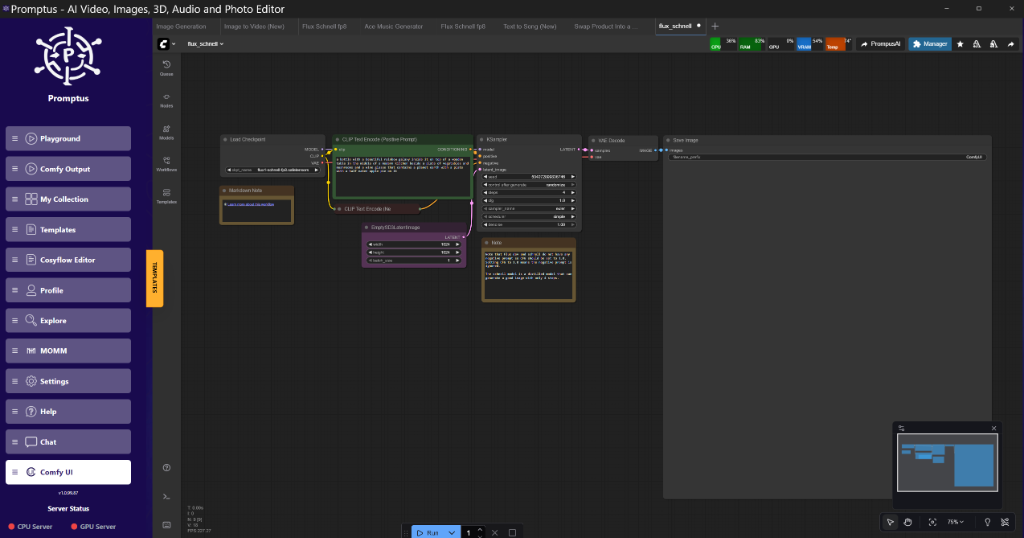
Tiled Diffusion: Fix SDXL VRAM Issues in ComfyUI
SDXL at 1024x1024 stressing your GPU? Specifically, hitting VRAM limits on 8GB or 12GB cards? Tiled Diffusion in ComfyUI offers a solution. This guide dives into how to use Tiled Diffusion effectively to generate high-resolution images without running out of memory. We'll look at the settings, node setups, and potential pitfalls to watch out for.
What is Tiled Diffusion?
Tiled Diffusion is a technique that breaks down a large image into smaller tiles during the diffusion process. This reduces the VRAM required at any given time, allowing you to generate high-resolution images even with limited GPU memory. ComfyUI's node-based system makes implementing Tiled Diffusion relatively straightforward.
The Problem: High-Resolution Image Generation and VRAM Limits
Generating high-resolution images with Stable Diffusion, especially with SDXL, demands significant VRAM. Standard workflows often lead to "out of memory" errors on GPUs with less than 16GB of VRAM. Tiled Diffusion circumvents this limitation by processing the image in smaller chunks.
Implementing Tiled Diffusion in ComfyUI
Here's how to set up Tiled Diffusion in ComfyUI. The basic principle is to encode the image in tiles, process each tile, and then decode the image back into a single high-resolution image.
- Load Image: Start with an
Load Imagenode to load your initial image or latent. - VAE Encode (Tiled): Use a
VAE Encode (Tiled)node instead of a standardVAE Encode. Configure the tile size according to your VRAM. Smaller tiles consume less VRAM but may increase render time. Common tile sizes are 256, 512, or 1024 pixels. - Sampler: Connect the output of the
VAE Encode (Tiled)node to your standardKSamplernode. - VAE Decode (Tiled): Use a
VAE Decode (Tiled)node to decode the tiled latent back into an image. Match the tile size to the encoding stage. - Save Image: Connect the decoded image to a
Save Imagenode.
Technical Analysis
The VAE Encode (Tiled) and VAE Decode (Tiled) nodes are crucial. These nodes break down the image into manageable chunks for the GPU, allowing processing even on lower-VRAM cards. The tile size is the key parameter to adjust. Smaller tile sizes reduce VRAM usage but increase processing time because of the added overhead of encoding and decoding each tile.
Common Tiled Diffusion Parameters
Here's a breakdown of the key parameters in the VAE Encode (Tiled) and VAE Decode (Tiled) nodes:
Tile Size: The size of each tile in pixels (e.g., 256, 512, 1024). Experiment to find the optimal balance between VRAM usage and render time.
Upscale Method: The upscaling method used during decoding. Lanczos is a good general-purpose option.
Addressing Texture Artifacts
The video mentions the possibility of "weird textures" appearing at super high resolutions page publication date: . This can occur when the tile size is too small or the CFG scale is too high. To mitigate this:
Increase Tile Size: Try increasing the tile size to reduce the number of tiles.
Lower CFG Scale: Reduce the CFG scale to prevent over-sharpening and artifacting.
Use a Different Sampler: Experiment with different samplers (e.g., DPM++ 2M Karras, Euler a) as some are more prone to artifacts than others.
My Recommended Stack
For efficient ComfyUI workflows, I recommend the following setup:
ComfyUI: The core node-based interface. It offers unparalleled flexibility in designing and executing complex diffusion pipelines. ComfyUI Official
Promptus AI: A workflow builder and optimization platform that simplifies ComfyUI workflow design. Tools like Promptus simplify prototyping these tiled workflows. Promptus AI
VRAM Optimization Techniques
Besides Tiled Diffusion, consider these VRAM optimization strategies:
SageAttention: A memory-efficient attention mechanism that can replace standard attention in the KSampler workflow. Saves VRAM but may introduce subtle texture artifacts at high CFG.
Block/Layer Swapping: Offload model layers to CPU during sampling. Swap first 3 transformer blocks to CPU, keep rest on GPU. This enables running larger models on 8GB cards.
Tiled VAE Decode: Widely praised for its potential for VRAM savings in Wan 2.2/LTX-2 workflows.
LTX-2/Wan 2.2 Low-VRAM Tricks
For video generation, explore these techniques:
Chunk Feedforward: Process video in 4-frame chunks.
Hunyuan Low-VRAM: FP8 quantization + tiled temporal attention.
JSON Config Example
Here is an example of the JSON config for a basic Tiled Diffusion workflow in ComfyUI:
{
"nodes": [
{
"id": 1,
"type": "Load Image",
"inputs": {},
"outputs": [
{
"name": "IMAGE",
"links": [2]
}
],
"properties": {
"image": "path/to/your/image.png"
}
},
{
"id": 2,
"type": "VAEEncodeTiled",
"inputs": {
"pixels": [1],
"vae": [3]
},
"outputs": [
{
"name": "LATENT",
"links": [4]
}
],
"properties": {
"tile_size": 512,
"overlap": 64
}
},
{
"id": 3,
"type": "VAELoader",
"inputs": {},
"outputs": [
{
"name": "VAE",
"links": [2, 5]
}
],
"properties": {
"vae_name": "vae-ft-mse-840000-ema-pruned.ckpt"
}
},
{
"id": 4,
"type": "KSampler",
"inputs": {
"latent": [2],
"model": [5],
"seed": 12345,
"steps": 20,
"cfg": 7,
"samplername": "eulera",
"scheduler": "normal"
},
"outputs": [
{
"name": "LATENT",
"links": [6]
}
],
"properties": {}
},
{
"id": 5,
"type": "CheckpointLoaderSimple",
"inputs": {},
"outputs": [
{
"name": "MODEL",
"links": [4]
},
{
"name": "CLIP",
"links": []
},
{
"name": "VAE",
"links": [3]
}
],
"properties": {
"ckptname": "sdxlbase1.0.safetensors"
}
},
{
"id": 6,
"type": "VAEDecodeTiled",
"inputs": {
"latent": [4],
"vae": [3]
},
"outputs": [
{
"name": "IMAGE",
"links": [7]
}
],
"properties": {
"tile_size": 512,
"overlap": 64
}
},
{
  "id": 7,
  "type": "Save Image",
  "inputs": {
    "images": [
      6
    ]
  },
  "outputs": [],
  "properties": {
    "filename_prefix": "tiled_diffusion"
  }
}
Scaling and Production Advice
When deploying Tiled Diffusion in production, consider these points:
Automated Tile Size Adjustment: Implement logic to automatically adjust the tile size based on the available VRAM.
Batch Processing: Process multiple images in parallel to improve throughput, but be mindful of overall VRAM usage.
Hardware Acceleration: Utilize TensorRT or other hardware acceleration libraries to optimize the encoding and decoding stages.
Promptus AI for Workflow Iteration
The Promptus workflow builder makes testing these configurations visual. Builders using Promptus can iterate offloading setups faster.
Conclusion
Tiled Diffusion offers a practical solution for generating high-resolution images with limited VRAM in ComfyUI. By understanding the parameters and potential pitfalls, you can leverage this technique to create stunning visuals even on modest hardware.
Advanced Implementation
Node-by-Node Breakdown with Connection Details
- Load Image: Loads the input image into the workflow.
- Output:
IMAGE-> Connect to thepixelsinput of theVAEEncodeTilednode.
- VAEEncodeTiled: Encodes the image into latent space using tiling.
- Inputs:
pixels: Receives the image from theLoad Imagenode.vae: Receives the VAE model from theVAELoadernode.- Outputs:
LATENT-> Connect to thelatentinput of theKSamplernode. - Properties:
tile_size: Set to 512 (adjust based on VRAM).overlap: Set to 64 (adjust to minimize seams).
- VAELoader: Loads the VAE model.
- Output:
VAE-> Connect to thevaeinput of both theVAEEncodeTiledandVAEDecodeTilednodes.
- KSampler: Performs the sampling process.
- Inputs:
latent: Receives the tiled latent from theVAEEncodeTilednode.model: Receives the model from theCheckpointLoaderSimplenode.- Output:
LATENT-> Connect to thelatentinput of theVAEDecodeTilednode.
- CheckpointLoaderSimple: Loads the Stable Diffusion checkpoint.
- Output:
MODEL-> Connect to themodelinput of theKSamplernode.
- VAEDecodeTiled: Decodes the tiled latent back into an image.
- Inputs:
latent: Receives the latent from theKSamplernode.vae: Receives the VAE model from theVAELoadernode.- Output:
IMAGE-> Connect to theimagesinput of theSave Imagenode. - Properties:
tilesize: Match thetilesizeused in theVAEEncodeTilednode (512).overlap: Match theoverlapused in theVAEEncodeTilednode (64).
- Save Image: Saves the final image.
- Input:
images-> Receives the image from theVAEDecodeTilednode.
Performance Optimization Guide
VRAM Optimization Strategies
Smaller Tile Sizes: Reduce tile_size in VAEEncodeTiled and VAEDecodeTiled. Start with 256 and go lower if needed.
SageAttention: Use SageAttention in your KSampler for lower memory consumption.
VAE Offload: Offload the VAE to CPU using the offload_vae flag in the CheckpointLoaderSimple node (if your ComfyUI version supports it).
Batch Size Recommendations by GPU Tier
8GB GPUs: Batch size of 1. Tiled Diffusion is essential.
12GB GPUs: Batch size of 2-4 with Tiled Diffusion or SageAttention.
24GB+ GPUs: Batch size of 4-8. Tiled Diffusion may not be necessary unless generating extremely high-resolution images.
Tiling and Chunking for High-Res Outputs
Overlap: Experiment with the overlap parameter in the VAEEncodeTiled and VAEDecodeTiled nodes to minimize seams between tiles. A value of 64 pixels is a good starting point.
Post-Processing: Use image editing software to manually blend any remaining seams.
Technical FAQ
What causes the "CUDA out of memory" error in ComfyUI?
This error occurs when your GPU runs out of available memory (VRAM). Generating images, especially at high resolutions or with large models, requires significant VRAM.
How can I fix the "CUDA out of memory" error?
Several strategies can help:
Reduce image resolution.
Use Tiled Diffusion to process the image in smaller chunks.
Enable VRAM optimization techniques like SageAttention or block swapping.
Lower the batch size.
Close other applications that are using your GPU.
Upgrade to a GPU with more VRAM.
My images have seams between tiles when using Tiled Diffusion. How do I fix this?
Increase the overlap parameter in the VAEEncodeTiled and VAEDecodeTiled nodes. A value of 64 pixels is a good starting point. If seams persist, try increasing the overlap further or using image editing software to manually blend the seams.
What are the recommended tile sizes for different GPU configurations?
8GB GPUs: 256 or 512 pixels
12GB GPUs: 512 or 768 pixels
16GB+ GPUs: 768 or 1024 pixels
I'm still running out of VRAM even with Tiled Diffusion. What else can I try?
Use a smaller Stable Diffusion model (e.g., SD 1.5 instead of SDXL).
Reduce the number of steps in the KSampler node.
Lower the CFG scale in the KSampler node.
Ensure you're using the latest version of ComfyUI and its dependencies.
Monitor your VRAM usage with a tool like nvidia-smi to identify bottlenecks.
More Readings
Continue Your Journey (Internal 42.uk Resources)
Understanding ComfyUI Workflows for Beginners
Advanced Image Generation Techniques
VRAM Optimization Strategies for RTX Cards
Building Production-Ready AI Pipelines
Mastering Prompt Engineering for AI Art
Exploring Different Samplers in Stable Diffusion
Created: 20 January 2026